Pallet rack looks like an erector set: Slot a beam in a different notch, and you’ve got a new configuration. But according to the Rack Manufacturers Institute (RMI) FAQs on modifications and changes to rack, that instinct can create an unsafe condition. A rack engineer designs a storage rack system for specific beam elevation configurations. Depicted on the system’s Load Application and Rack Configuration (LARC) drawings and load capacity plaques, changing beam elevations to heights outside of pre-approved positions may compromise the rack’s capacity or result in a risky situation.
“Any changes to beam elevations outside of the rack’s original design should be reviewed by a qualified, professional rack engineer,” advised Jonathan Hirst, Vice President and General Manager at North American Storage Equipment Company (NASECO). The company is a member of RMI. “Before considering any beam elevation change that isn’t on the LARC drawing—even if it’s just by two inches—there are several things to consider.”
Here’s what rack owners should know before making a beam elevation change.
Ask “Do We Really Need This?” First
Hirst’s first step isn’t engineering. It’s restraint.
“Adding a new elevation to the LARC is not something that should be undertaken lightly,” he said. “That’s because every approved elevation requires documentation, management, and communication to the individuals loading the racks.”
The trap he sees most often: facilities chasing small efficiency gains until they’ve created dozens of near-identical elevations.
“There’s a point of diminishing returns in which optimizing for space can create an enormous burden from a management standpoint on the other end,” Hirst explained. “Each new elevation may need its own load poster, its own operator training, its own line in the inspection binder. Best practice is to aim for ten or fewer distinct elevations across a facility. That keeps the administrative side and the compliance side in check.”
Extra Clearance Is Usually There for a Reason
Hirst says the instinct to reclaim empty-looking space is almost universal.
“Operations will say, ‘Oh, we have 12 inches of air up there. If we move the rack beams closer together, we can better optimize our facility’s storage,’” he said.
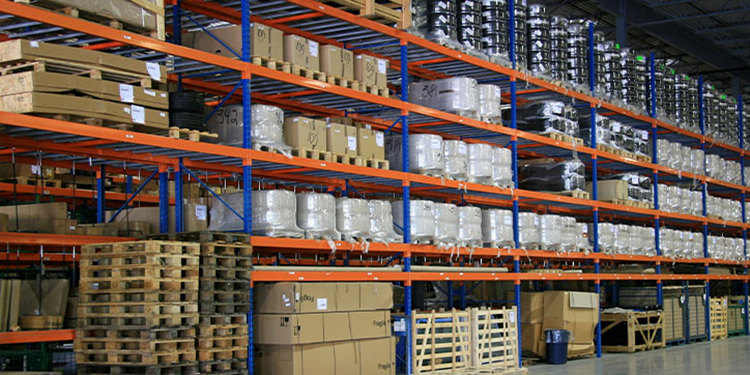
However, gaps in storage rack typically exist for a good reason. Among them are sprinkler clearance, for load placement or lift-off, or simply to give an operator a bigger target for placing a pallet without hitting the beam.
“Three inches of lift-off is great when a load’s position is under 12 feet, because a forklift operator can easily see it,” explained Hirst. “When a rack engineer designs beam elevation spacing that same three-inch lift-off at 28 feet in the air, they need to accommodate significantly different sight lines.”
Essentially, he continued, what looks like reclaimable air can actually be load-rating margin, fire code clearance, or a safety buffer for an operator accessing pallet loads two stories up.
Consolidate Before You Adjust Beam Elevation
Rather than creating a new elevation for every product size or supplier request, Hirst urges facilities to look for a configuration that already covers the need.
“I always recommend that operations attempt to reduce the number of different beam elevations, not add to them,” he noted.
However, over 15 to 20 years, warehouses tend to accumulate one-off adaptations of the original design. For example, one bay’s beams raised by a couple of slots in one location but lowered elsewhere. For safety, and to remain in compliance with the original LARC drawings, each unique beam elevation requires its own drawing and its own line item during inspection.
“If a facility’s rack only has six variations versus a dozen, that keeps the inspection, the replacement parts, and the interchangeability of components much simpler,” added Hirst.
Know Which Code Version Applies to the Rack
Additionally, Hirst noted that many rack owners often don’t realize that a new beam elevation isn’t automatically evaluated under the same building code that the rest of the existing rack.
“The first question you need to answer with your rack engineer is what standards apply to this new elevation,” he said. Adding a single elevation to an existing, sealed drawing might be assessed against the original code year, such as 2012. Conversely, the current standard applies to a design that extends the layout with new rows of racking.
Likewise, new replacement components can also differ from what’s already installed. “Just because you have a pile of beams sitting in the corner doesn’t necessarily mean those are the beams you’re allowed to use,” cautioned Hirst.
After a New Beam Elevation is Approved
Hirst emphasized that engineering sign-off is only part of the process. Upon finalizing a new beam elevation, load posters need updating, inspectors need to know the new configuration exists, and operators need direct training.
Beam elevation changes can ripple further than the rack itself. Raising shelf beams can affect fire egress plans, sprinkler coverage, and even the concrete slab underneath.
“There are many scenarios, especially in seismic areas, where the limiting factor is actually the strength of the concrete floor,” Hirst said. He noted that floor specification verifications often fall outside a rack engineer’s scope, but are still essential.
“Further, adding a beam at a low level might strengthen the frame enough to safely add capacity there,” he continued. “But adding weight higher up is a different calculation entirely, and the base plate has its own maximum too. All of these factors contribute to the safety of the overall system.”
Learn More About Safe Rack Design and Use
Ultimately, a beam elevation change can look like a two-inch adjustment. In practice, it can touch engineering standards, load capacity, fire protection, and slab strength all at once. Before moving a beam, the safest approach is the same one RMI’s FAQ recommends. Bring in a qualified engineer to confirm the new configuration works safely.
For more on rack modifications and other rack design and use topics, visit RMI’s full FAQ library and related standards.