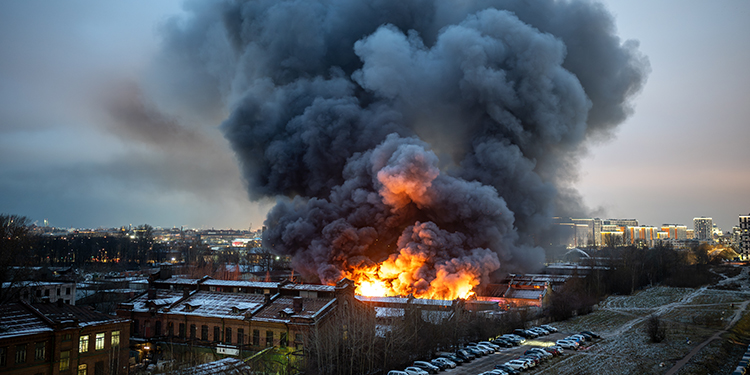
Fire protection plays a critical role in the safe design and operation of storage rack systems. Yet sprinkler and fire protection requirements often receive attention late in the planning process—sometimes after rack layouts are already finalized.
“To avoid costly redesigns, fire protection considerations should be addressed early,” said Gary Smith, PE, and Rack Manufacturers Institute (RMI) fire safety consultant. “Certain sprinkler requirements can directly impact rack layout, aisle spacing, and storage configuration.”
Gathering key project information upfront can help rack manufacturers and suppliers and rack owners better coordinate with fire protection engineers (FPEs), sprinkler designers, and sprinkler contractors. The following checklist outlines the details that facilitate collaboration, minimize surprises, and result in code-compliant rack and fire protection designs.
Fire protection requirements can influence everything from aisle widths to storage density. Addressing them early helps reduce delays, redesigns, and unexpected costs.
“This checklist isn’t about designing sprinklers,” Smith emphasized. “It’s about asking the right questions early, so the rack and fire protection systems work together.”
By preparing this information before engaging a fire protection professional, rack manufacturers and owners can support safer, more efficient rack installations—and smoother project execution overall.
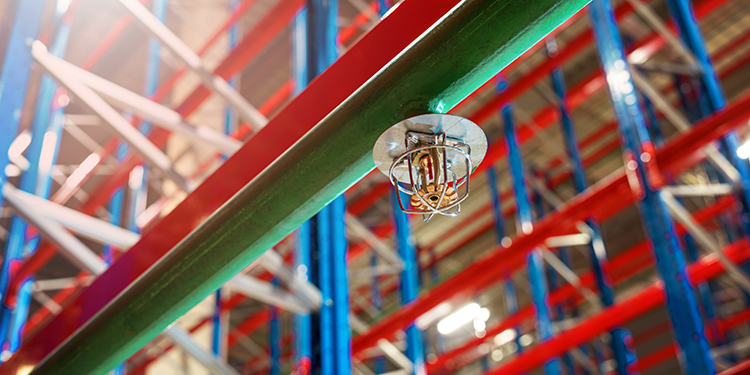
Key Fire Protection Standards That May Apply
Rack manufacturers and owners are not expected to interpret fire codes themselves, added Smith. “However, it is helpful to understand the primary standards that fire protection professionals rely on when designing sprinkler systems for rack storage,” he said.
Common sources of fire safety requirements include:
- National Fire Protection Association (NFPA) 13 – A widely adopted design standard for the installation of sprinkler systems. It provides detailed guidance on sprinkler types, spacing, clearances, and protection levels based on storage configuration and commodities.
- International Fire Code (IFC) – Published by the International Code Council (ICC), the IFC establishes regulations intended to safeguard life and property from fire and explosion hazards. Many jurisdictions adopt the IFC, sometimes with local amendments.
- FM Global Property Loss Prevention Data Sheets – Engineering guidelines used by FM Global and other insurers to reduce the potential for fires and limit property damage. These requirements can be more stringent than local fire codes and may significantly influence sprinkler and rack design.
Because jurisdictions and insurance carriers may enforce different standards, identifying which of these apply to a specific project is a critical early step in the planning process.
A Fire Protection Planning Checklist for Rack Projects
1. Facility Identification and Location
Basic project details provide the foundation for all fire protection decisions. This includes the company name and the facility’s physical street address—not just a mailing address.
Location matters because fire protection requirements vary widely by jurisdiction. Cities, counties, and states often adopt different versions of fire codes, sometimes with local amendments.
2. Authority Having Jurisdiction and Fire Code Edition
Every rack project falls under an Authority Having Jurisdiction (AHJ). This may be a city fire department, county agency, or state authority.
It is important to identify which fire code the AHJ currently enforces, as well as which edition year applies. Newer code editions typically include more stringent requirements. Knowing this early helps prevent misalignment later in the permitting process.
3. Insurance Company Requirements
Fire codes establish minimum requirements, but insurance carriers may impose additional standards.
“If a facility is insured by a provider like FM Global, those requirements can exceed the local fire code,” Smith explained. “That can affect sprinkler density, water supply, and rack layout.”
Confirming requirements for whether insurer approval—and identifying the insurer—helps avoid unexpected changes after designs are complete.
4. Project Schedule and Installation Sequence
Understanding the project timeline is essential. This includes the schedule for building construction, sprinkler installation, and rack installation.
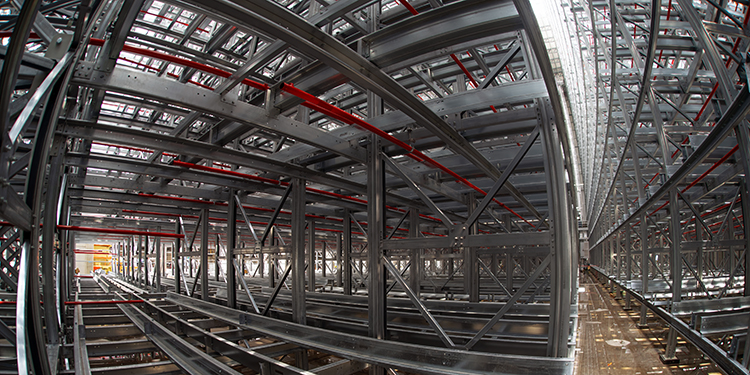
In many cases, rack design occurs before sprinkler design. However, sprinkler requirements can influence beam elevations, clearances, and flue spaces. A clear schedule helps all parties coordinate efficiently.
5. Type of Building Construction
The type of building significantly affects fire protection needs. Projects typically fall into one of three categories:
- New construction still in the design phase.
- New “spec” buildings with ceiling sprinklers already installed.
- Existing buildings with operational sprinkler systems.
Each scenario presents different constraints and opportunities for fire protection planning.
6. Existing Sprinkler System Information
For facilities with existing sprinklers, available documentation is extremely valuable. This may include drawings, permits, or inspection records.
If documentation is unavailable, a fire protection professional may need to evaluate the system or recreate drawings. Older buildings often require closer review to confirm sprinkler capacity and coverage.
7. Predominant Rack Type
The type of rack system directly affects sprinkler performance. Single-row racks, back-to-back racks, deep-lane storage, and automated systems all interact differently with fire suppression systems.
“Rack density and configuration influence how water reaches a fire,” Smith said. “That’s why rack type must be shared with the sprinkler designer early.”
Automation introduces additional considerations due to electrical components and system complexity.
8. Ceiling Height and Storage Height
Both ceiling height and proposed storage height matter. Sprinkler performance depends on adequate clearance between the top of storage and ceiling-level sprinklers.
A tall building with low storage height may still require adjustments to sprinkler design. Always communicate these dimensions clearly.
9. Stored Commodities
What is being stored can be just as important as how it is stored. NFPA 13 classifies commodities based on combustibility, packaging, and materials.
Plastics, aerosols, and certain packaging types require higher levels of protection. Providing accurate commodity information helps fire protection professionals determine appropriate sprinkler strategies.
10. Special Conditions Inside the Facility
Certain conditions can affect sprinkler effectiveness. These may include high-volume, low-speed (HVLS) ceiling fans, solid shelving or decking, and plastic pallets.
“These factors don’t necessarily prevent sprinkler use,” Smith noted, “but they must be accounted for during design. For example, failure to disclose these details early can lead to last-minute changes.”
11. Rack Layout Drawings
Rack drawings showing layout, configuration, and flue spaces are among the most helpful tools for fire protection planning.
Clear drawings allow sprinkler designers to assess water distribution, identify obstructions, and determine whether in-rack sprinklers or additional clearances are necessary.

Learn More About Rack Fire Protection
Looking for more details about integrating fire suppression systems and storage rack? Find additional details in the “Building Departments and Fire Codes” section of RMI’s frequently asked questions (FAQs) page.