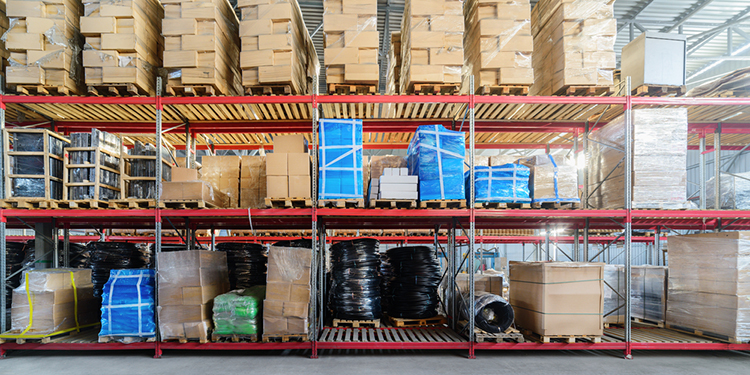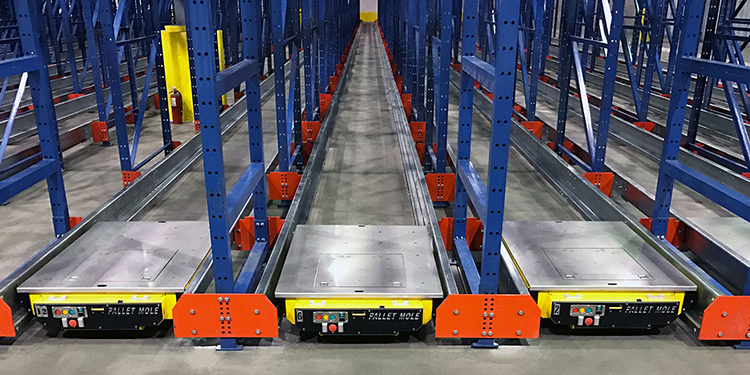
Warehouse operators face a big decision when they consider automation: what degree of technology should they deploy? For operations that can’t justify an automated storage and retrieval system (AS/RS), a semi-automated shuttle system offers a middle ground. It sits between conventional racking and full automation. How does an operation determine if a semi-automated shuttle system is right for their needs? And what do managers and operators need to know about safely running a shuttle system post-installation?
According to Tommy Sinclair, CEO of Engineered Products, a member of the Rack Manufacturers Institute (RMI), it’s typically a combination of factors that make the case for a semi-automated shuttle investment. Here, he explains the indicators that point toward this system. He also covers how safety practices should change once a facility installs one, plus common misconceptions that trip up automation projects.
Indicators That Point Toward a Semi-Automated Shuttle System
The first sign that a semi-automated shuttle system might be right for a warehouse is a mismatch between stock keeping unit (SKU) count and lane depth.
“If you think about your SKU mix being fairly deep and not wide—so you’re storing a high quantity per SKU—that’s a good signal that a semi-automated solution might be a good fit,” Sinclair said.
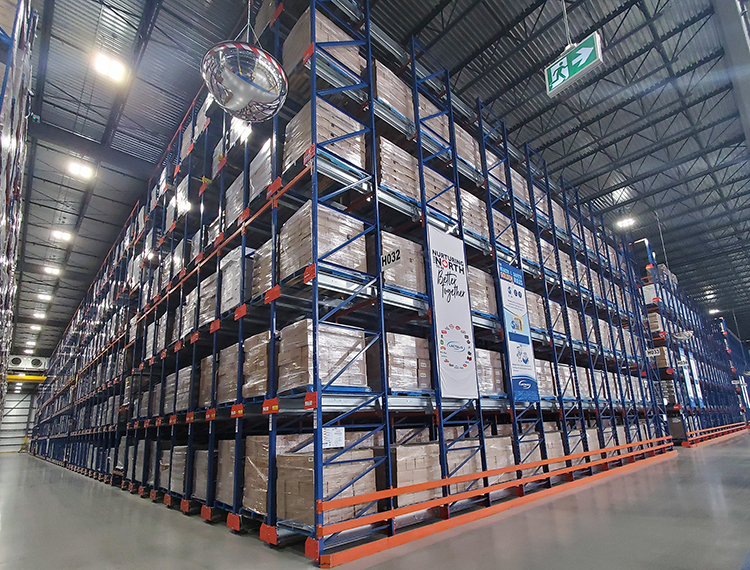
Density pressure drives many decisions, too. “A facility can’t always expand its footprint, but its volume keeps growing. That combination demands more storage within the same space,” he added.
Labor issues can also push facilities toward a semi-automated shuttle system. Many warehouses face forklift operator shortages and high turnover. Others watch operators spend long hours driving in and out of deep lanes. Sinclair noted this problem hits cold storage especially hard. Operators in freezer environments spend extended time in harsh conditions. Adding automation can reduce that exposure.
Rack damage is another indicator. Forklifts maneuvering in narrow lanes or drive-in systems can often cause frequent impact damage. That damage often points to a need for change.
“It’s usually a combination of two or three of these signals that begin to point toward shuttles as something to consider,” Sinclair said. “The tipping point is often the need to balance selectivity needs against SKU count and pallets per SKU. A high SKU count relative to selectivity needs makes a semi-automated shuttle system worth evaluating.”
Rack Safety Changes With a Semi-Automated Shuttle System
Automation changes both the operational environment and the safety considerations that come with it.
“For example, in a conventional system rack design engineers mainly account for static loads,” explained Sinclair. “However, a semi-automated shuttle system requires a different review. Engineers need to assess the rack specifically for shuttle use, not just static loading.”
Deploying a shuttle system also necessitates more frequent rack inspections, he added.
“The automation doesn’t necessarily raise inspection complexity, but it does change what inspectors look for,” said Sinclair. “Conventional racking inspections mostly target impact damage from forklift collisions. A semi-automated shuttle system introduces a new concern: wear from cyclical use. Inspectors should watch for loosening bolts and connections.”
That said, with shuttles, forklifts still operate at the face of the lane. Therefore inspectors should continue to assess the racking for impact damage as well.
“Operating procedures shift, too,” he added. “In the event of a jam or even for routine inspection and maintenance, a shuttle system requires lockout procedures and lane-clearing protocols that conventional systems don’t need.”
Semi-Automated Shuttle System or Full AS/RS?
Sinclair frames the decision between partial and full automation around the operation’s core needs.
“An operation that requires full automation should choose an AS/RS. But many facilities just need a step toward automation,” he noted. “A semi-automated shuttle system lets them capture density and labor-reduction benefits without the full capital cost of an AS/RS.”
Additionally, shuttles are less complex to integrate with a warehouse management system (WMS) or warehouse control system (WCS) than fully automated solutions. “That makes it a strong option for operations that aren’t ready for full system integration,” added Sinclair.
A Common Misconception: Labor Savings
Many facility owners overestimate the labor savings a semi-automated shuttle system delivers, cautioned Sinclair. That’s because, unlike an AS/RS, this system still requires an operator at the face of the lane. That operator uses a forklift to load and retrieve product manually; the shuttles transport the pallet loads back into the lane for storage.
“It’s important for there to be consensus among the operations, maintenance, and finance teams about the realistic benefits a semi-automated system will deliver,” Sinclair advised.
Conversely, shuttle systems installed in cold storage environments can offer significant labor savings.
“A semi-automated shuttle system reduces the time operators spend inside a freezer. That reduction drives much of the system’s value in cold storage,” he noted. “As a result, a company may need to weigh certain return on investment factors differently than they would in an ambient warehouse.”
What Should Change Post-Installation
A facility’s maintenance practices need to evolve once it installs a semi-automated shuttle system. Operators can’t just carry over their conventional rack program. Sinclair pointed to several key areas that require new attention.
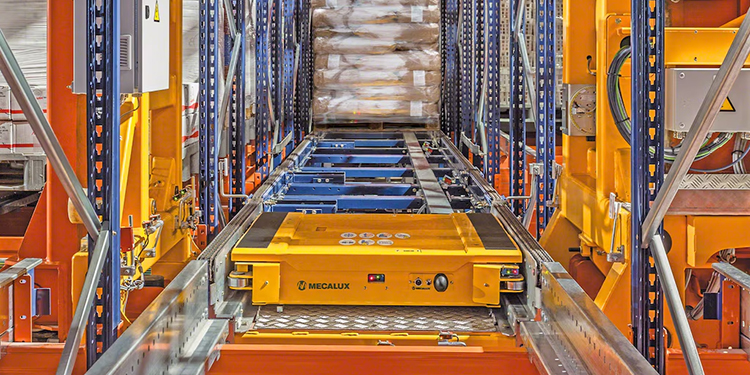
- Maintenance training and spares. A shuttle system runs on hardware that eventually wears out. Facilities need spare shuttle units on hand to avoid downtime. They also need a documented program for battery upkeep, since batteries degrade with use and need regular monitoring.
- Operator training. Operators need training beyond basic system operation. They need to know how to clear a fault and safely retrieve a shuttle that stalls or falls out of commission mid-lane. “This training reduces downtime and keeps staff from improvising unsafe workarounds,” explained Sinclair.
- A tailored rack inspection program. A conventional inspection checklist doesn’t transfer directly to a semi-automated shuttle system. Facilities need a documented program that reflects how the system actually operates. That program should account for the specific loads, cycles, and equipment interactions the shuttle introduces.
- Shuttle-specific preventative maintenance. Teams should build a routine around the shuttle’s moving parts. This includes monitoring battery health, tracking charging procedures, and identifying the best location to charge units. “Teams should also watch for wear on the track and wheels,” Sinclair added.
Together, these practices help a facility catch problems early. They also protect the safety gains a semi-automated shuttle system is meant to deliver.
Learn More About Semi-Automated Shuttle Systems
Several RMI members engineer, manufacture, and supply semi-automated shuttle systems. Connect with them and access design and safety resources at mhi.org/rmi.