At MODEX 2026, the Rack Manufacturers Institute (RMI) presented an on-floor education session, “Storage Rack Safety 101.” The presentation focused on the fundamentals of safe rack engineering, as well as how to maintain compliant warehouse racking systems.
Marc Rousseau, Vice President of National Accounts and Strategic Partnerships at RMI member Damotech, led the first half of the discussion. He focused on the importance of safe rack engineering in both design and real-world warehouse conditions.
Rousseau noted that—in a live warehouse environment—rack systems face constant exposure to impact, wear, and operational stress. While catastrophic failures are rare, the conditions that lead to them are often visible well in advance, especially when safe rack engineering principles are not followed. He outlined the most common warning signs of rack damage and shared how small issues can escalate into serious safety risks over time.

Rack Damage Starts Small—But Undermines Safe Rack Engineering Over Time
Rousseau emphasized that rack failures rarely happen without warning. Instead, they develop gradually through repeated impacts and overlooked damage that compromise safe rack engineering performance.
“Column damage is probably one of the more frequent and visible things that we’re going to see,” he explained. “As we push operators to go faster, it’s inevitable that impacts will happen over time.”
While severe damage is easy to spot, Rousseau warned against ignoring smaller issues that can erode safe rack engineering integrity.
“It’s not just the major damage that could cause concerns,” he said. “It’s the small stuff that over time can add to the weakening of the structural integrity of the upright.”
Even minor deformations can compromise a rack’s ability to safely support loads. This is particularly true in high-density or seismic environments it is critical to apply safe rack engineering standards.
Understanding Damage Through the Lens of Safe Rack Engineering
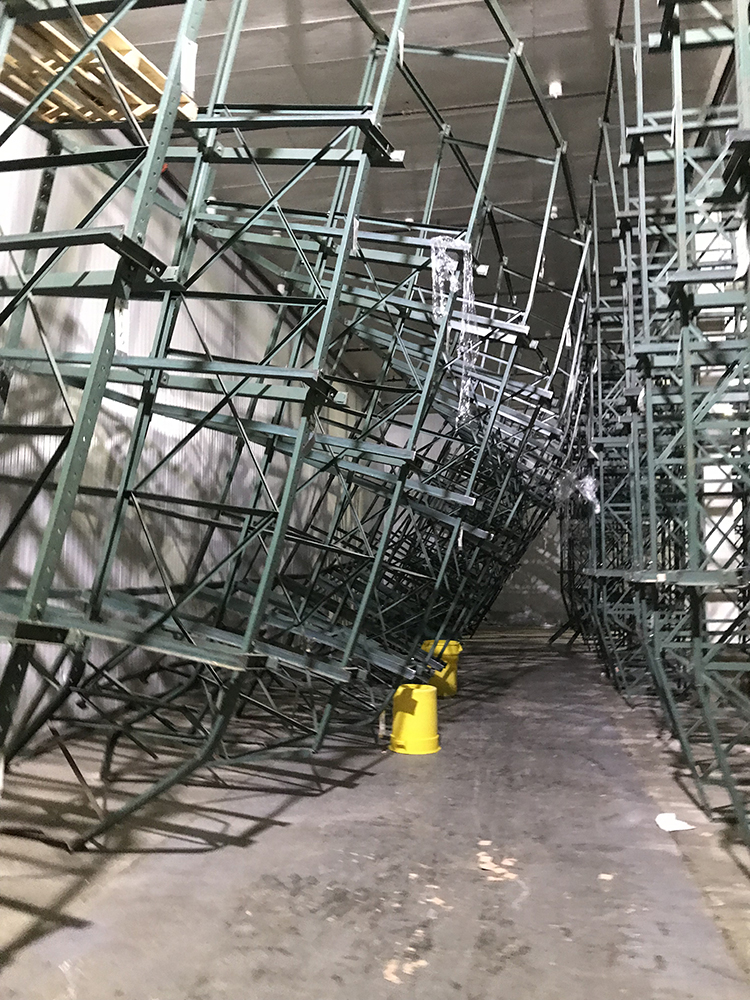
Rack systems are engineered to support vertical loads—not repeated impacts. When components are damaged, their structural performance changes. That, in turn, means they no longer align with safe rack engineering design assumptions.
“Racking is meant to hold product,” Rousseau noted. “It’s not meant to be bounced around like a bumper car.”
Among the most common issues:
- Column damage from forklift impacts.
- Frame bracing damage, particularly at lower levels.
- Base anchor damage caused by outriggers or equipment.
- Beam and connector issues that affect load transfer.
- Decking damage that creates safety hazards or reduces load support.
Rack owners often underestimate bracing damage in particular, he said. “If you start seeing deformations in your diagonals or horizontal bracing, it’s worth having someone come in and address the situation,” advised Rousseau.
Similarly, base anchors—critical to rack stability—frequently sustain damage. “A lot of what we design today is not intended for impact,” he said. “You need to be aware of those anchors and replace them if they’ve been compromised.”
Improper Loading Is a Hidden Risk
Not all rack safety issues stem from physical damage. Improper pallet loading and changing inventory profiles can also create serious hazards that fall outside safe rack engineering parameters.
“If pallet sizes have changed over time, they may not fit the system’s design,” Rousseau explained. “It’s not just upright or beam damage that can get you in trouble. Loading practices matter too.”
Clearances, overhang, and spacing are all defined by code and engineering standards. Deviating from those parameters increases the risk of instability or product fall-through while undermining the original safe rack engineering design intent.
Why “Quick Fixes” Can Make Things Worse
One of the most critical warnings Rousseau shared involved improper repairs. In many facilities, well-meaning maintenance teams attempt to fix damage using welding or field modifications. These repairs, however, frequently violate safe rack engineering requirements.
“The code doesn’t say you can’t weld an upright,” he said. “But the steps required to do it correctly are so significant that it’s often better to replace the component or use an engineered repair.”
He added that proper welding requires certified procedures, inspection, and documentation. In-house welding repairs rarely meet these standards, which are essential to maintaining safe rack engineering compliance.
“I have yet to see a customer with the documentation to prove that a weld was done adequately,” Rousseau noted.
Other common but unsafe practices include tying racks together or anchoring them to building structures without engineering approval.
“If it wasn’t designed that way, you shouldn’t be doing that,” he said. “If you want to change something, ask an engineer.”
Protecting Rack Systems—and Your Operation
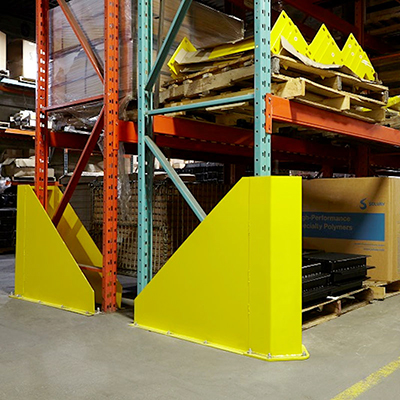
Preventing rack damage is far more cost-effective than repairing it after the fact. Rousseau stressed the importance of proactive protection strategies rooted in safe rack engineering best practices.
“People don’t like to spend money on protecting uprights,” he said. “But collisions are a fact of life. If you protect the asset from the start, it will last much longer.”
Key protective measures include:
- Installing upright protectors and end-of-aisle barriers.
- Reinforcing high-impact areas.
- Using proper decking and safety accessories.
- Ensuring connection locks and safety pins are in place.
Even the smallest components play a critical role in overall safety.
“These things cost a couple dollars,” Rousseau said. “But they can prevent a beam from dislodging—and that’s when bad things happen.”
The Cost of Inaction
Ignoring rack damage can lead to more than just structural issues. The consequences often include downtime, product loss, and regulatory exposure.
“The last thing you need is downtime because of an incident or an inspection,” Rousseau said. “That can shut operations down at the worst possible time.”
Ultimately, rack safety is about more than compliance. It’s about protecting people, products, and productivity through consistent application of safe rack engineering principles.
“No damage is good,” Rousseau added. “Stay on top of it, address issues early, and make sure your system continues to perform the way it was designed.”
Get More Insights into Rack Safety from RMI
Ultimately, rack systems require continuous inspection, proper maintenance, and disciplined operational practices. Without them, risk increases quickly, concluded Rousseau. “The goal is simple.You want your employees to operate in a safe environment and go home to their families.”
To watch the recording of the education session, click here. For more ways to improve rack safety, review RMI’s list of Frequently Asked Questions on its website, mhi.org/rmi.