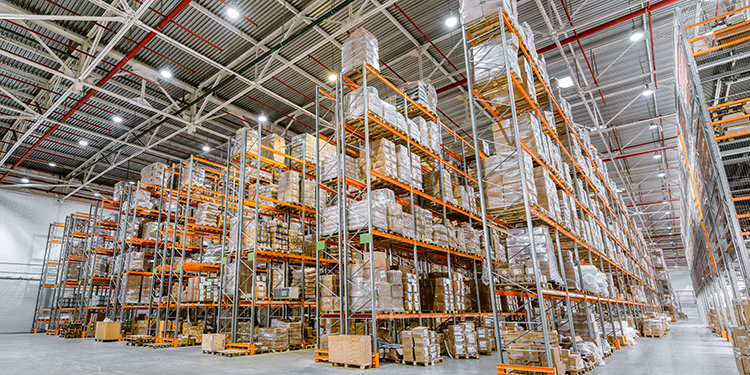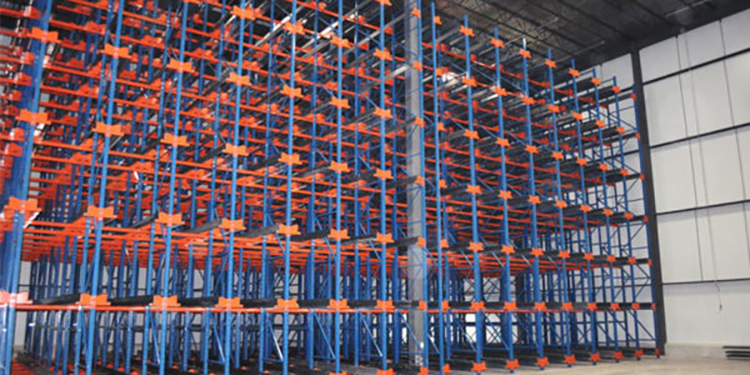
Automation is transforming warehouse operations at a rapid pace. Technologies like automated storage and retrieval systems (AS/RS), shuttle systems, automatic guided vehicles (AGVs), and autonomous mobile robots (AMRs) promise higher storage density, improved accuracy, and reduced labor dependency. With all these benefits, why isn’t every warehouse automated already? Upfront investment is a major factor, of course. However, other frequently overlooked considerations include the roles that rack design for automation, engineering precision, and building conditions play in determining whether automation is feasible—or even advisable—in a given operation.
Automation Pushes Rack Design Further
At a glance, pallet rack systems used in automated environments may look similar to those used in conventional forklift operations. However, from an engineering perspective, rack design for automation is fundamentally different from traditional rack design.
“Automated systems are typically applied in large-scale, high-density or high-bay storage environments, where maximizing space utilization and operational efficiency is critical,” said Dillon Wang, Engineering Manager at North American Steel Equipment Inc., a member of the Rack Manufacturers Institute (RMI). “In these cases, rack design is pushed much further versus conventional systems.”
A major distinction in rack design for automation is the type of engineering calculations these systems require. Conventional rack systems rely primarily on static calculations. However, automated systems often require modeling using advanced dynamic analysis simulation software.
“Simulation modeling allows engineers to evaluate how the entire system behaves under operational conditions. This includes movement and even seismic effects,” Wang explained. “Rack design for automation requires significantly more engineering time, but results in a more optimized and refined rack design.”
Why Precision Matters in Rack Design for Automation
In conventional warehouses, human forklift operators can make real-time adjustments when retrieving or placing loads. Automation doesn’t have the same capacity to adapt to variances—at least not yet.
“Automation equipment relies heavily on physical precision and accuracy as it follows fixed paths or programmed instructions,” Wang said. “If the rack is out of tolerance, the system cannot compensate.”
That reality makes precision a defining requirement in rack design for automation, driving tighter standards across both fabrication and installation.
On the manufacturing side, this includes stricter control over:
- Straight columns.
- Tight column-beam connections.
- Consistent anchor hole spacing.
- Base plate positioning.
Installation requirements are equally demanding.
“Plumbness, levelness, and positional accuracy become critical,” added Wang. “What is acceptable in conventional rack would be completely unacceptable in an automated system.”
Retrofitting Challenges: When Existing Rack Design Falls Short
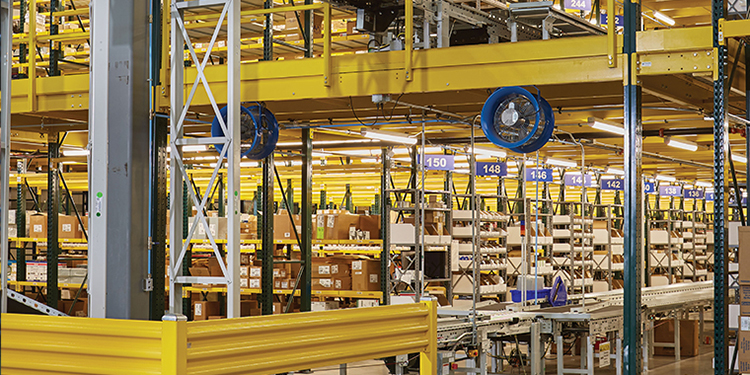
For many companies, the biggest hurdle isn’t designing a new automated facility—it’s adapting an existing one that was never built with rack design for automation in mind.
“In retrofit scenarios, the building itself is often the limiting factor,” Wang explained.
Common issues include:
Floor Conditions
Automation systems require extremely flat and level floors over long distances—something older facilities rarely provide.
“Simple shimming is typically not sufficient,” said Wang. “Adjustable base plates are commonly applied. In some cases, full concrete remediation becomes necessary.”
Slab Capacity
High-density systems tied to rack design for automation can introduce much higher point loads than conventional rack, sometimes exceeding original slab design limits.
Clear Height
Older warehouses often have lower ceiling heights, limiting the ability to implement high-bay automated storage.
Fire Protection Requirements
Increased storage density may trigger the need for sprinkler system upgrades to meet current fire codes.
In some cases, building constraints ultimately determine whether rack design for automation is feasible. Wang recalled a project where even relatively small deviations in floor conditions became a critical issue.
“The floor slab was assumed to be level within 1/8 inch over 10 feet, non-cumulative slope,” he said. “That level of precision becomes essential when you’re dealing with automation at scale.”
For large systems—such as facilities with tens of thousands of pallet positions—these tolerances are not just preferences. They’re requirements, emphasized Wang.
How Automation Changes Rack Safety Priorities
Automation doesn’t eliminate rack safety concerns—it changes them.
Traditional rack systems are designed to withstand forklift impacts. In contrast, rack design for automation shifts the focus toward long-term system reliability and precision.
“The focus shifts from protecting racks from human error to ensuring overall system reliability,” Wang explained.
That includes:
- Maintaining alignment and tolerances over time.
- Monitoring system performance.
- Coordinating rack integrity with automated equipment and software systems.
Designing Today with Rack Design for Automation in Mind
Not every operation is ready to automate today. But that doesn’t mean companies shouldn’t plan for it.
“The best approach is to think about automation readiness early,” Wang advised. “That includes floor conditions, clear height, and overall building design.”
Early collaboration is key to effective rack design for automation.
“Bringing in racking, slab, and fire protection engineers at the concept stage allows the facility to be designed as an integrated system,” he said.
This approach helps ensure that when automation becomes viable, the underlying rack system and building infrastructure are ready.
With rapid advancements in artificial intelligence, robotics, and warehouse management systems, some companies hesitate to invest in automation out of concern that today’s technology could quickly become outdated. Wang recommends a more balanced approach.
“Don’t try to predict the perfect future system,” he said. “Instead, focus on designing a facility and rack system that are automation-ready and flexible enough to accommodate future upgrades.”
In other words, prioritize rack design for automation readiness, even if full automation isn’t in the immediate future.
Learn More About Rack Design for Automation from RMI
Ultimately, for many operations, the decision to automate comes down to more than just return-on-investment (ROI) calculations. It also depends on whether the rack system, building infrastructure, and engineering precision can support the demands of automation in the first place.
“By understanding these factors—and planning for them early—warehouse operators can make smarter decisions today while keeping the door open for tomorrow’s automation opportunities,” concluded Wang.
RMI members are available to help prepare warehousing and distribution operations for automation. As the industry’s leading suppliers of industrial steel storage racks and related structural systems, they supply industrial rack solutions worldwide and in virtually every major manufacturing and distribution sector. For more details, visit RMI’s website.