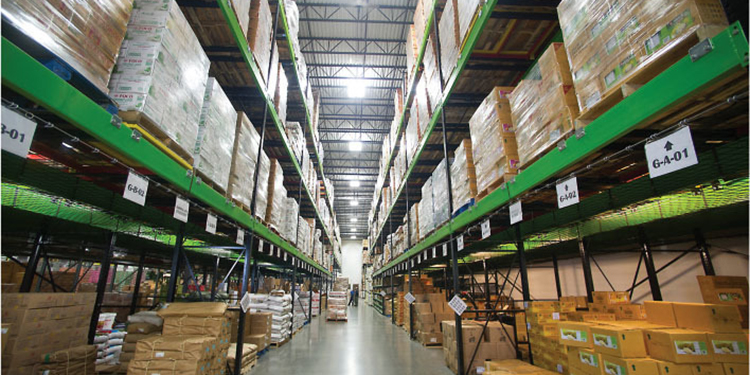
Storage racks are the backbone of modern warehouses and distribution centers. They support thousands of pounds of inventory every day while enabling efficient storage and retrieval of products. But because employees work around racking systems constantly, racks are also one of the most significant sources of structural risk in a warehouse environment. Therefore, to help buyers, operators, and facility managers understand how to specify safer storage systems, the Rack Manufacturers Institute (RMI)—an industry group of MHI—recently released a video explaining the value of the R-Mark certification.
The short video highlights how R-Mark™ certification helps identify rack manufacturers whose systems meet rigorous engineering, testing, and quality standards.
Why Rack System Safety Matters
Storage racks are a foundational element of warehouse operations, yet they are often taken for granted until a problem occurs. Rack failures can lead to damaged inventory, operational disruption, and serious injuries.
As warehouses grow taller, denser, and more automated, ensuring that rack systems are properly engineered, manufactured, and installed has become even more critical.
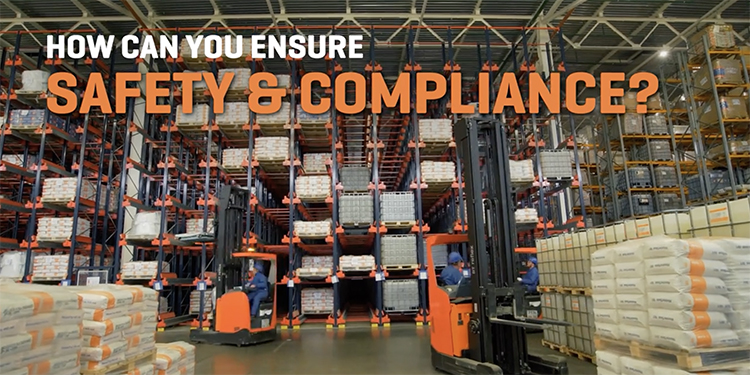
“Racking is the backbone of a warehouse or distribution center,” the video explains. “And because of that, it’s a significant source of the risk that your employees interact with each day.”
With so much at stake, warehouse operators and rack buyers must ensure that their systems comply with modern safety standards and engineering requirements.
What Is the R-Mark Certification?
The R-Mark certification indicates that a manufacturer has demonstrated its ability to design, manufacture, and install rack systems that comply with the latest applicable safety standards.
“R-Mark is a voluntary certification program that verifies a manufacturer’s systems comply with applicable American National Standards Institute (ANSI) standards,” explained Patrick Davison, Director of Standards at MHI. “It’s available to manufacturers of storage rack systems and rack decking.”
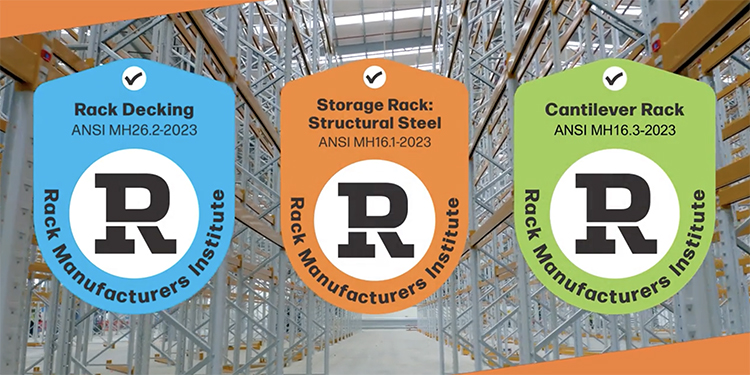
RMI develops several ANSI standards that establish the engineering and testing requirements for rack systems, including:
- ANSI MH16.1: Design, Testing, and Utilization of Industrial Steel Storage Racks, referenced by the International Building Code (IBC) as the standard for safe design and installation of steel storage racks.
- ANSI MH16.3: Design, Testing, and Utilization of Industrial Steel Cantilevered Storage Racks
- ANSI MH26.2: Design, Testing, and Utilization of Industrial Steel Rack Decking
These standards establish the technical framework engineers use to design rack systems capable of safely supporting the loads and configurations found in modern storage operations.
Certification Applies to Complete Rack Systems
Importantly, the R-Mark certification applies to complete rack system designs, not individual rack components.
“R-Mark certification indicates that a storage rack manufacturer has demonstrated they can manufacture, design, and install a storage rack system that complies with the applicable ANSI standard,” Davison said. “Ultimately, R-Mark certification reinforces claims of quality, defined as a system’s ability to fulfill its intended purpose.”
Because rack performance depends on how components are configured and installed, certification must account for the entire system design.
“So much of the strength or performance characteristics of a storage rack depend on its proper design and installation,” Davison noted. “It’s like a giant Erector set—built correctly, it’s strong and stable. Built incorrectly, it’s vulnerable to failure.”
A Rigorous Certification Process
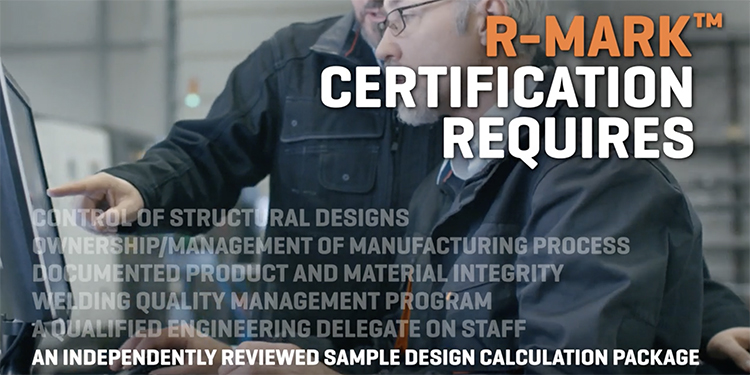
Obtaining R-Mark certification requires manufacturers to undergo a detailed review process that evaluates both engineering practices and manufacturing quality controls. As described in the video, certified companies must demonstrate:
- Control of their structural rack designs and oversight of the manufacturing process.
- Documented product and material integrity programs, including physical testing of critical components.
- A welding quality management program.
- Employment of a qualified engineering delegate responsible for verifying compliance with standards.
- Submission of a design calculation package reviewed and approved by an independent professional engineer.
Additionally, testing and verification are essential parts of the certification process.
“Systems bearing the R-Mark logo were engineered and manufactured to meet the minimum standards as verified by a third-party licensed professional engineer,” explained Amit Kutumbale, Director of Engineering at Steel King Industries, a member of RMI. “The review includes real-world load testing and verification of quality procedures to ensure a system meets those ANSI standards.”
Manufacturers must also confirm compliance with proper manufacturing practices, including welding procedures consistent with standards from the American Welding Society.
“R-Mark Certified Manufacturers must certify that they follow good manufacturing practices and that their welders are properly trained and certified,” noted John Krummell, President and CEO of Advance Storage Products, another RMI member. “If someone cuts corners on weld quality, the rack can look fine but be unsafe.”
Annual Verification and Accountability
Another key feature of the R-Mark program is ongoing accountability. Manufacturers must complete a re-certification process each year, verifying that their systems continue to comply with applicable standards.
“Annually, a manufacturer must verify that it still meets the standards,” Krummell explained. “Both an engineering representative and a corporate officer must sign an attestation confirming their authorized status. That puts accountability at the highest level.”
This continuing review helps ensure that certified companies maintain consistent engineering practices and quality control procedures.
Why Buyers Should Look for the R-Mark
For rack buyers, facility managers, and safety professionals, the R-Mark provides valuable assurance when specifying rack systems. Because certified designs meet recognized engineering standards, they can help reduce risk and avoid costly surprises during permitting or inspections.
“If you source from a manufacturer that isn’t certified, you might find out—too late—that the racks aren’t up to code,” Kutumbale noted. “Then you’re forced to modify or even replace them.”
Specifying R-Mark certified systems demonstrates due diligence in selecting rack equipment engineered to meet modern safety expectations.
“Purchasing R-Mark certified racking from an R-Mark certified manufacturer is a strategic choice for any business that is serious about adhering to verified standards,” added Paul Neal, President of UNARCO Material Handling, an RMI member.
However, buyers should remember that RMI membership alone does not guarantee certification. The rack system itself must carry the R-Mark designation, typically shown on load application drawings or capacity plaques.
Learn More About R-Mark Certified Manufacturers
The video concludes with a simple recommendation for warehouse operators and rack buyers: look for the R-Mark when selecting a rack vendor. The designation signals that a manufacturer has undergone rigorous evaluation and demonstrated compliance with recognized rack engineering standards.
RMI members are the industry’s leading suppliers of industrial steel storage racks and related structural systems. They supply industrial rack solutions worldwide and in virtually every major manufacturing and distribution sector. Currently there are more than 30 R-Mark certified manufacturers. For more details about the R-Mark certification program and how it benefits storage rack buyers, visit RMI’s website at mhi.org/rmi/rmark.