Even industry veterans sometimes have to play detective when it comes to a rack system’s origin. According to the Rack Manufacturers Institute’s (RMI) frequently asked questions (FAQ) on identifying a rack’s original equipment manufacturer (OEM), determining who built a given system can be difficult. However, there are reliable clues to look for.
“When I’m asked to help identify a rack manufacturer, there are things I can see right away that tell me if it was or wasn’t made by my company,” said Dan Wierzba, Central Inside Sales Manager at RMI member Steel King Industries. With nearly four decades of experience in the rack industry, Wierzba has had a lot of practice figuring out a rack’s maker.
Here he shares several clues that he and his peers at other RMI member companies use to determine the original equipment manufacturer (OEM) of an existing storage rack system.
Start With What’s Stamped, Stenciled, or Stickered
RMI’s FAQ recommends starting with a visual inspection of the rack components themselves. It advises looking for manufacturer stickers, embossed stamps, or stenciled markings.
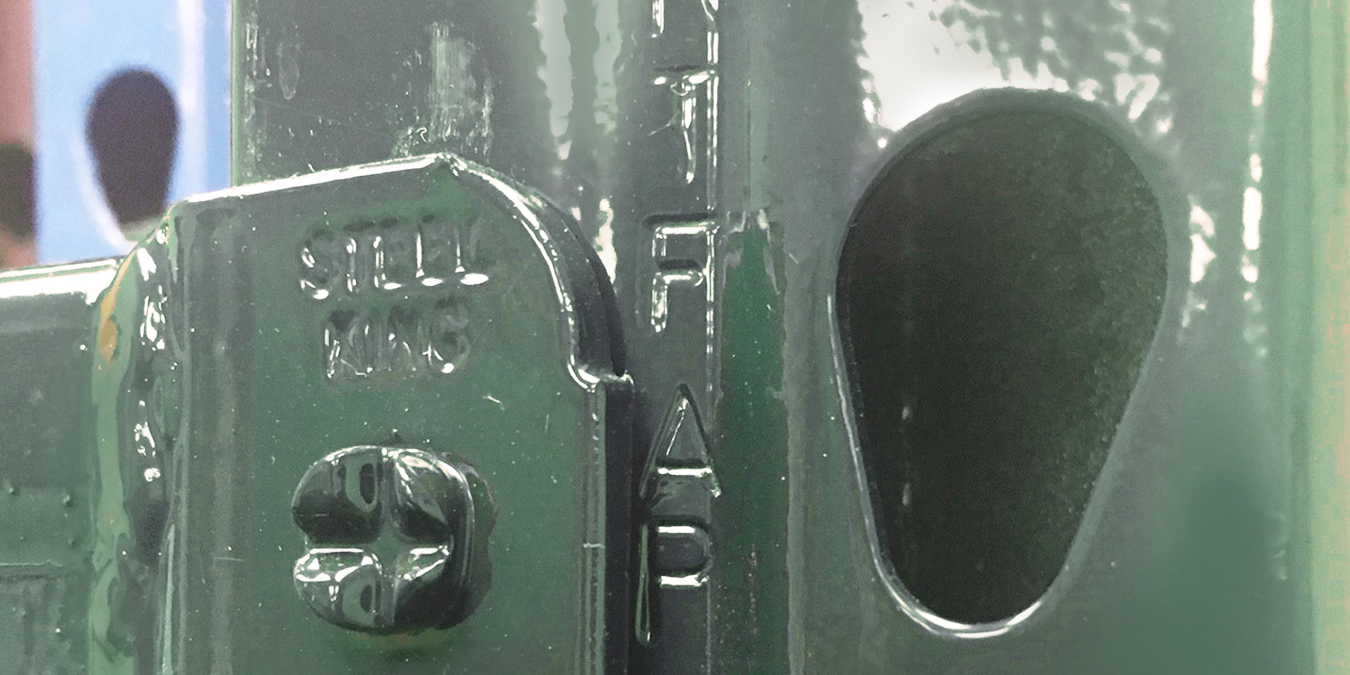
Wierzba said Steel King stamps its beam connectors. Additionally, its beams and uprights carry a partial model number, details he said aren’t universal across the industry.
“I don’t think I’ve seen another manufacturer stamp a model number into their uprights, or into the base plates. It costs us slightly more to do that, but it helps answer exactly this kind of question,” he explained.
Construction and Bracing Can Be Fingerprints, Too
Beyond stickers and stamps, the physical construction and appearance of the upright frame often reveal who manufactured it.
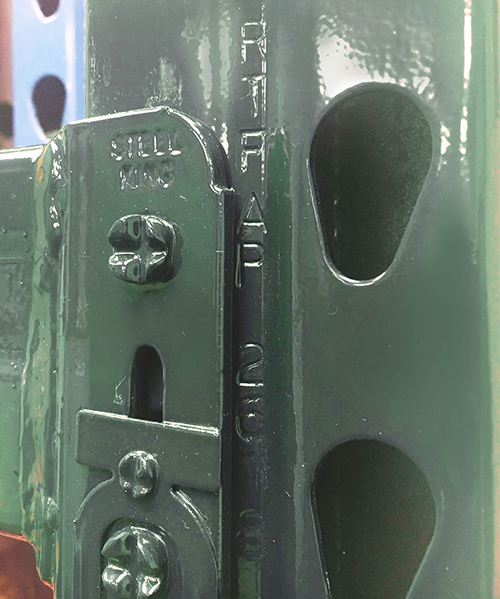
“For boltless-style rack, the connection from the beam to the upright is one of the first things I look at,” Wierzba said. “Even our teardrop hole has a slightly different shape than other manufacturers’. Ours is pretty much symmetric, while some others have a little hook to them.”
He also advised looking at the bracing used in the structure.
“Our bracing is all solid, closed tubes—rectangular for the horizontals, round for the diagonals,” Wierzba explained. “Many manufacturers use three-sided, open form bracing instead of a true tube. Additionally, if I see a bolted-together upright, where bolts instead of welds connect the horizontals and diagonals, I can tell right away it’s not ours.”
He added that even color can be a clue, though a less reliable one. “We offer a lot of different colors, and some manufacturers only offer two or three,” he added. “Sometimes a color can help point me in the right direction, though photos can be tricky depending on the camera.”
Designs Evolve, So Older Rack Can Look Different
Wierzba cautioned that a manufacturer’s current design isn’t necessarily what an older system in the field will look like. Most manufacturers’ designs have evolved over the years, so it’s worth keeping the system’s age in mind.
“Our current SK2000 style has been in production since 1992,” he noted. “Before that, we had an open-back design, and our horizontals and diagonals weren’t solid tubes either. They were three-sided, which looked more like how other manufacturers currently construct their bracing.”
Paperwork Still Matters
RMI’s FAQ notes that purchase records, load application and rack configuration (LARC) drawings, and load plaques often carry OEM information directly. Wierzba agreed those are some of the most reliable sources of rack manufacturer identification when they’re available.
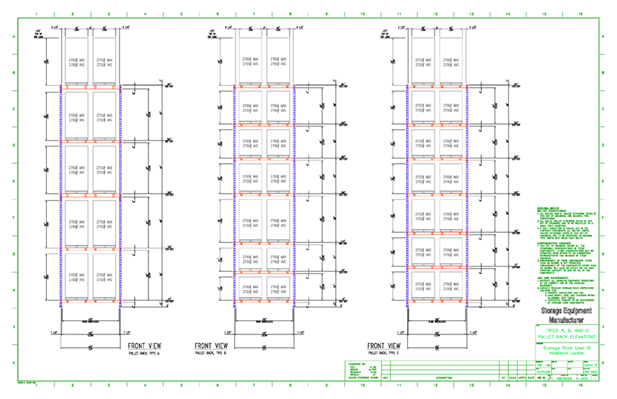
“If it’s a more specialized system, like drive-in rack, we can sometimes track down the original customer’s address in our system and pull the original drawings,” he said.
For more commonly used boltless pallet rack, in Wierzba’s experience, most operations have misplaced the records. “Someone will call and say, ‘I bought this ten years ago.’ When I ask if they have the original drawings, they usually don’t,” he explained. “However, if they do have them, that’s often the fastest way to determine who built the system.”
When All Else Fails, Call In Reinforcements
If you come up empty searching for stamps, construction details, and paperwork, RMI’s FAQ offers another alternative. It advises photographing the rack’s beam connectors, base plates, bracing, and upright columns, then sending those images to RMI’s managing executive for distribution to its members.
Wierzba added that many manufacturers also lean on their distributor networks for help.
“If someone sends me pictures and I don’t think it’s ours, I’ll give them the name of a local distributor who may recognize it,” he said. RMI’s earlier guide on identifying used racking covers similar ground for facilities working through this process on their own.
Why It Matters
Identifying a rack’s manufacturer isn’t just a curiosity. It typically comes up when a facility needs to confirm capacity or plans to add to an existing system.
“Often, people just want to know the weight capacity of the rack they already have,” Wierzba said. “Safety directors need that information to post the right signage so the people loading the rack know what it can hold. I get more of these calls now than I used to, as more companies have safety directors paying closer attention.”
Another other common reason is system expansion, he continued.
“You can’t just take rack manufacturer X’s beams and put them on rack manufacturer Y’s upright. While they might physically fit together, RMI doesn’t recommend that approach. That’s because a rack manufacturer engineers each industrial rack system for use in a specific application. The components must work together to ensure the proper load capacity for the structure. As such, mixing rack components isn’t safe,” emphasized Wierzba.
Confirming Your Rack’s Origin Protects Everyone Downstream
Whether the goal is posting an accurate capacity plaque or safely expanding an existing system, tracking down the original rack manufacturer is worth the legwork. Between physical inspection, surviving paperwork, and RMI’s member network, it’s usually possible to trace a system back to its source. Therefore, don’t skip properly identifying your rack. It’s the first step toward a safe repair, addition, or capacity confirmation.
For more on rack identification and other rack design and use topics, visit RMI’s full FAQ library and related standards.