Warehouse safety starts on the floor—but it’s sustained through consistent rack safety inspections. At MODEX 2026, the Rack Manufacturers Institute (RMI) used its “Storage Rack Safety 101” education session to spotlight how routine rack safety inspections play a critical role in identifying risks, preventing failures, and maintaining compliant racking systems. The session reframed inspections not as a periodic task, but as an ongoing operational discipline essential to protecting both people and products.
Jay Fusciardi, Southeast Regional Sales Manager at of RMI member Ridg-U-Rak, led the second half of the presentation. He emphasized that rack safety inspections are not optional—they are a core operational responsibility. Fusciardi explained that without regular rack inspections, even well-designed systems can quickly become safety hazards.

Rack Safety Inspections Are the Foundation of a Safe Operation
Fusciardi described rack systems as tools that operations must use correctly and examine regularly through consistent rack safety inspections.
“The storage rack systems are like having a toolbox at your disposal,” he said, noting that just like any tool, improper use or lack of inspection leads to failure. Rack safety inspections help ensure systems continue to perform as designed, even in fast-paced environments.
Fusciardi further emphasized that inspections are not a one-time activity. Rather, they must occur at multiple stages of a system’s lifecycle.
“There are four different types of inspections: installation, system inspections, reconfiguration, and after damage or repair,” Fusciardi said.
Each type of rack safety inspection serves a specific purpose:
- Installation inspections verify that system construction matches the manufacturer’s specifications.
- System inspections monitor ongoing condition and usage.
- Reconfiguration inspections ensure changes meet current standards.
- Post-damage inspections confirm repairs restore structural integrity.
Together, these rack safety inspections support ongoing efforts to safeguard personnel, facility assets, and inventory.
Inspections Prevent Risk from Unauthorized Changes
One of the most important roles of rack safety inspections is identifying unauthorized or unengineered modifications.
“You’ll get somebody that says, ‘That bottom beam level’s a pain… we could store a tall pallet under there,’” Fusciardi said.
Without proper inspections and engineering reviews, that decision can dramatically reduce system capacity.
“You might have taken that system from a 30,000-pound capacity down to 12,000,” he explained. “Now you’ve opened yourself up for a real problem.”
Regular rack safety inspections help catch these changes before they create dangerous conditions.
Inspections Must Include Critical Installation Details
Effective rack inspections go beyond visible damage. They also verify foundational elements like anchors, shims, and alignment.
“When you see anchors installed at an angle, or threads sticking up two inches, those are not good things,” stressed Fusciardi. He noted that even small installation issues can compromise long-term performance.
“By putting two anchors too close together, you can actually fracture your slab,” he added.
Inspections should always confirm that systems remain properly anchored, level, and aligned.
Found Damage? Immediate Action is Essential
Fusciardi stressed that rack safety inspections are only valuable if they lead to action.
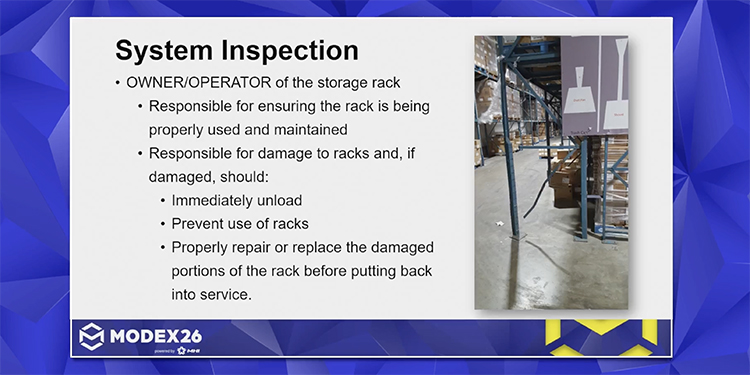
“The owner-operator is responsible to ensure the rack is properly maintained,” he said. “If there’s damage, they should immediately unload, prevent use, and repair it.”
While formal schedules matter, Fusciardi emphasized that rack inspections should be part of everyday operations. That means empowering employees to identify issues and report them immediately—an essential extension of any formal rack safety inspection program.
Another key benefit of routine rack inspections is preventing improper repairs, Fusciardi added. “They’ll put a column protector on a damaged rack and assume that’s okay. It’s not. You’re just covering up a problem.”
Rack inspections should identify these situations and ensure repairs address root causes, not just symptoms.
Get More Insights into Rack Inspections from RMI
Ultimately, consistent rack safety inspections are the foundation of a proactive safety program, concluded Fusciardi.
“Peace of mind comes with a proactive preventive maintenance and safety awareness program,” he said. By prioritizing rack inspections at every stage—installation, operation, modification and repair—facilities can reduce risk, improve compliance, and protect both people and productivity.”
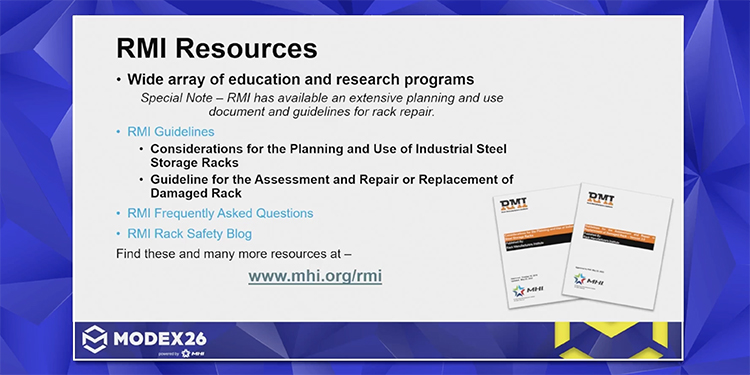
To view the recording of the education session, click here. For more ways to improve rack safety, review RMI’s list of Frequently Asked Questions on its website, mhi.org/rmi.