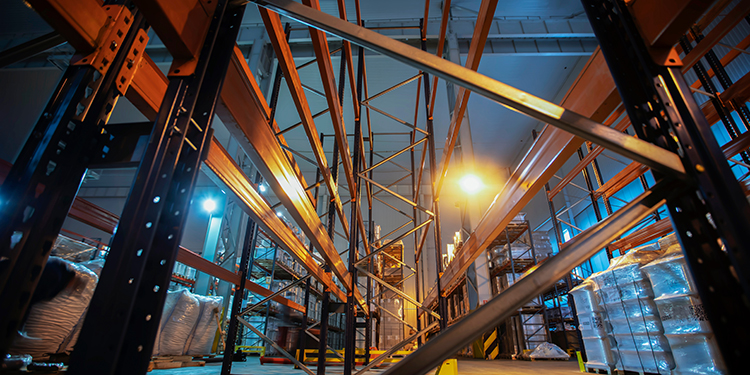
Industrial storage rack sits at the center of nearly every warehouse operation. However, as facilities evolve, so do the demands placed on those systems. In a recent MHI Tech Talk, members of the Rack Manufacturers Institute (RMI) explored how rack system design, inspection, and certification are adapting to support safer, more automated supply chains.
The discussion—titled “Future Ready Storage Rack Systems for Modern Supply Chain Optimization”—featured insights from:
- John Schmidt, CEO of Rack Builders and current RMI president.
- Tommy Sinclair, CEO of Engineered Products and vice president of the RMI Executive Committee.
- Brian Pfannes, President of Steel King Industries and secretary of the RMI Executive Committee.
Here are the key takeaways from the conversation.
Rack Systems Are the Backbone of the Warehouse
 Kicking off the discussion, Schmidt emphasized the foundational role every rack system plays across material handling operations. He also stressed why that makes proper engineering and oversight critical.
“Storage rack really is the backbone of any material handling operation,” he said, noting that reality underscores RMI’s long-standing mission.
“Since its founding in 1958, RMI has focused on ensuring that rack systems are engineered, manufactured, installed, and utilized safely and effectively,” explained Schmidt. This includes developing American National Standards Institute (ANSI)-accredited standards and continuously updating them through research and industry collaboration.
Rack System Damage Impacts More Than Safety
While rack safety is often viewed through a compliance lens, the panel stressed that damage has broader operational consequences. Pfannes pointed out that even minor issues can have a ripple effect across a facility.
“Rack system damage doesn’t just pose a safety risk. It can also directly impact the efficiency and effectiveness of a warehouse,” he explained. “It’s not just a maintenance issue. It’s a throughput and profitability issue, too.”
Damage can reduce usable storage positions, force load downgrades, and limit capacity utilization. All of these potential problems make regular rack system inspections essential for both safety and performance.

Professional Rack Inspections Are Critical
When it comes to identifying and addressing rack system issues, the speakers encouraged operations to engage qualified experts for professional inspections.
“You want to reach out to a professional. That could be either the original manufacturer or a licensed engineer with experience in racking,” Schmidt advised.
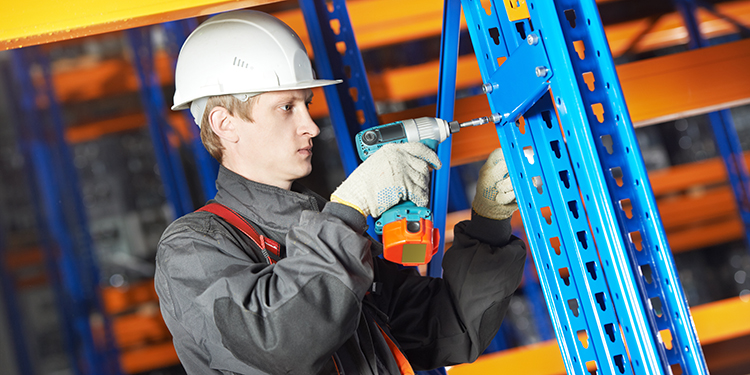
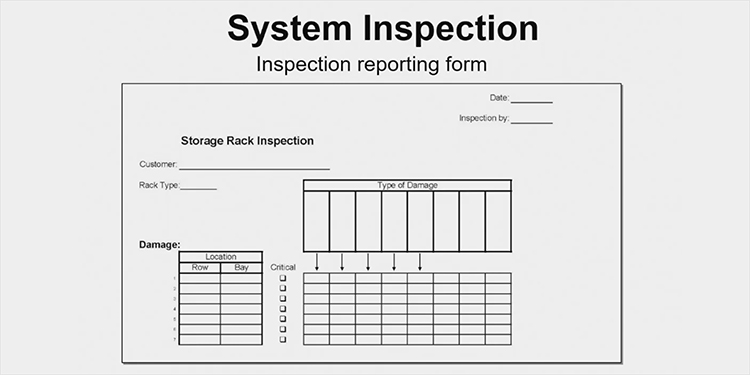
Pfannes added that inspections should focus on key structural elements. These include upright damage, beam deflection, connections, and anchoring systems. These components all play a role in maintaining rack stability. Overlooking any one of them can compromise the system as a whole.
Automation Is Reshaping Rack System Requirements
As more facilities adopt automation, rack systems must evolve to meet tighter tolerances and new performance expectations. Sinclair explained that automated environments introduce fundamentally different design requirements compared to traditional operations.
“It’s really around the required design standards and the structure tolerances,” he said. “In an automated system, those tolerances can be much tighter—sometimes defined in millimeters.”
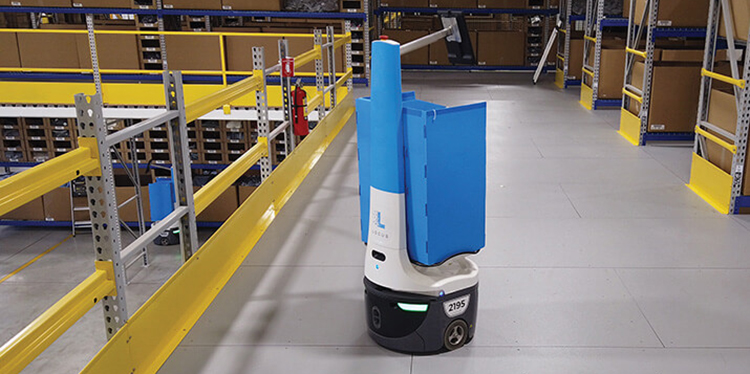
Schmidt noted that even entry-level automation, such as autonomous mobile robots (AMRs) and automatic guided vehicles (AGVs), can impact rack design and layout. Referring to both the robots’ navigation and their ability to interface with the storage system, “you need to think about how that’s specifically going to change the rack,” he said.
To address these challenges, RMI is working to develop clearer guidelines in collaboration with system integrators. The intent is to ensure rack structures align with the precision demands of automation technologies.
R-Mark Certification Provides Credibility and Confidence
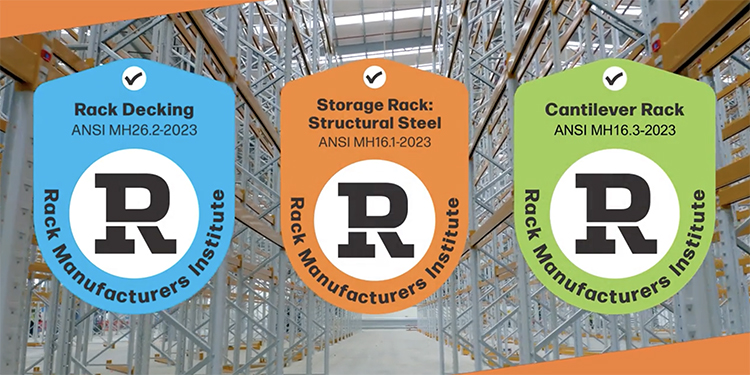
The panel also highlighted the importance of RMI’s R-Mark certification program. This process validates a manufacturer’s ability to design and produce rack systems in accordance with RMI and ANSI standards.
“It demonstrates that a company understands how to engineer and manufacture storage rack to the RMI standards,” Schmidt explained.
Pfannes added that the certification process requires third-party validation and rigorous testing. “It provides credibility,” he said, “as certified companies must stand behind their engineering and manufacturing practices.”
“R-Mark credibility is also comprehensive,” agreed Sinclair. “RMI members manufacture systems in both structural steel and cold-formed steel. That distinction matters in how racks perform under load and during seismic events. When you work with R-Mark certified manufacturers, you’re working with companies whose processes, engineering, and testing have been validated to perform under those conditions.”
Education and Standards Will Drive the Industry Forward
 Looking ahead, the trio detailed how RMI is prioritizing two key initiatives: expanding education and advancing standards for automated systems.
Sinclair pointed to the organization’s growing focus on training and workforce development. “Rack design isn’t something you go to school for,” he said. “So part of our role is making sure the industry is prepared to meet evolving demands.”
At the same time, RMI continues to invest in developing updated guidelines for automated storage and retrieval systems (AS/RS) and other automated applications. The goal, added Sinclair, is to ensure that safety and performance keep pace with innovation.
Start with the Right Partner
As facilities plan upgrades or automation investments, the speakers stressed the importance of engaging rack system experts early in the process.
“Get a rack manufacturer or distributor involved early on,” Schmidt advised. “When you’re planning a warehouse or thinking about how it’s going to operate.”
With rack systems influencing everything from safety to throughput, early collaboration helps ensure an operation makes the right design decisions from the start.
Get More Insights into Rack System Safety from RMI
From inspection best practices to automation-driven design changes, RMI’s Tech Talk panelists highlighted how rack systems are becoming more complex—and more critical—than ever. By focusing on standards, certification, and education, RMI members are working to ensure those systems continue to support safe, efficient, and future-ready operations.
To watch the recording of the Tech Talk, click here. For more ways to improve rack safety, review RMI’s list of Frequently Asked Questions on its website, mhi.org/rmi.