Warehouse operations are changing fast, and rack engineering sits at the center of that shift. As originally reported in MHI Solutions magazine, automation and facility complexity are driving the need for greater precision, stronger standards, and deeper engineering expertise.
While rack structures may look familiar, the discipline behind them continues to evolve. The Rack Manufacturers Institute (RMI) is advancing rack engineering through updated standards, expanded education, and a stronger global network.
Rack Engineering Standards Continue to Evolve
RMI serves as the standards-setting authority for industrial steel storage racks in North America. Its engineering committee leads ongoing efforts to refine and update technical guidance.
John Schmidt, CEO of Rack Builders Inc. and RMI president, emphasizes the continuous nature of this work. “That’s a continual thing. The standards always need to be kept up with the current science.”
This ongoing evolution reflects a key reality: rack engineering is not static. As materials, loads, and warehouse demands change, standards must keep pace.
Expanding Reach Strengthens Rack Engineering
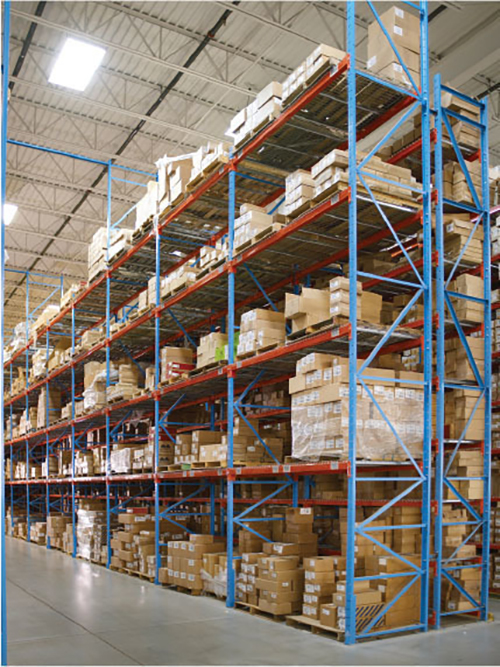 RMI continues to grow its membership, now representing more than 40 companies worldwide. This expansion strengthens collaboration and broadens expertise across the industry.
Brian Pfannes, president of Steel King Industries and RMI secretary, highlights this momentum. “We really try to focus on member value and our reach. While based in North America, our reach is extending to member companies from all over the globe,” he said. “We’re finding ways to continue to deliver value to all of our membership, recognizing that they’re not just based in the U.S.”
RMI has also improved its membership process. “We’ve enhanced our processes about how you can become a member of the RMI,” Pfannes said. “That’s a benefit both to existing membership and streamlining the process for new potential members.”
In addition, RMI’s monthly statistics program provides confidential market data. Schmidt explains its value: “a big reason a lot of members benefit.” The program helps companies benchmark performance and understand their position in the market.
Building the Next Generation of Rack Engineering Talent
As the industry evolves, so does the need for skilled engineers. RMI launched its Education Summit in 2025 to address this challenge.
Schmidt describes the initiative as “a desire to provide more support, more value to our member companies. It was aimed at training staff primarily, but we had a second, non-technical track.”
The inaugural event brought together experienced engineers and emerging professionals. “The feedback we received was terrific,” Schmidt said.
Pfannes underscores the long-term goal. “We face challenges in succession planning,” he explained. “All of us were blessed with having some senior, well-experienced engineers and position players in our companies, but how do we build that bench for the future? That was one of the core tenets for the education summit.”
Investing in education ensures that rack engineering expertise continues to grow alongside industry demands.
Automation Raises the Bar for Rack Engineering
Automation is transforming warehouse design and increasing the complexity of rack engineering. Technologies such as automatic guided vehicles (AGVs) and automated storage and retrieval systems (AS/RS) require tighter tolerances and more rigorous analysis.
Schmidt notes the growing adoption of these systems, while Pfannes describes the pace of change. “There are so many dynamic players out there. I’d call it a very quickly changing landscape. Our customer base, with solutions, is continuing to evolve.”
Tommy Sinclair, CEO of Engineered Products and RMI vice president, points to the engineering impact. “What’s changed is some of the requirements in how they’re evaluated to make the engineering environment a little bit more rigorous…The approach to design changes quite a bit. It makes the tolerances more difficult to achieve.”
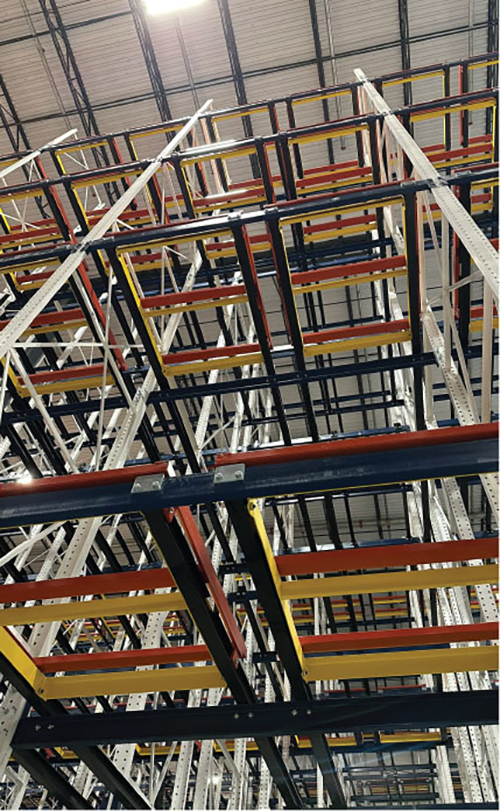 Without a unified U.S. standard for automated systems, companies often look abroad. Sinclair explains they turn “to the European codes to understand the ultimate tolerances…We have some work to do if we want to keep up and lead rather than receive.”
This gap presents an opportunity for RMI to lead. Pfannes explains, “When you look to the RMI as the governing body for storage systems, there’s an opportunity for us to put standards in place for automation that we all can follow so that our end customers are confident in the products that we put forward.”
Safety and Certification Remain Central to Rack Engineering
Safety remains a core focus of rack engineering, especially as systems grow taller and more complex. Schmidt points to ongoing challenges in the field. He describes a “wild west” environment for rack repair and inspection, where inconsistent practices can create risk.
To address this, RMI is working with other industry groups to improve guidance and consistency.
The R-Mark certification program also continues to evolve. “We just recently, two years ago, went through a process of the R-Mark 2.0, beefing up the requirements,” Schmidt said.
RMI plans to increase awareness of the certification among rack owners. As Schmidt explains, “It’s looking for that R-Mark before you make a phone call.”
Advancing Rack Engineering for the Future
As warehouses adopt automation and expand globally, rack engineering will play an even greater role in safety and performance. Standards must evolve, talent must grow, and systems must meet higher expectations.
Through education, collaboration, and updated standards, RMI is helping the industry adapt. The goal remains clear… To ensure that rack systems are engineered to perform safely, reliably, and efficiently in a rapidly changing environment.
Connect with RMI
The Rack Manufacturers Institute (RMI) members are the Industry’s leading suppliers of industrial steel storage racks and related structural systems. They supply industrial rack solutions worldwide and in virtually every major manufacturing and distribution sector. Learn more at RMI’s website, mhi.org/rmi.