For decades, deep-lane storage rack systems offered a highly efficient way to maximize warehouse storage density. As long as the rack design met basic flue space requirements, rack suppliers and owners had considerable flexibility in how deep pallet loads could extend. That flexibility has changed—and continues to evolve—as fire codes respond to new data, testing, and real-world fire events.
Recent updates made by National Fire Protection Association (NFPA) to NFPA 13, the primary standard governing sprinkler system design, place new limitations on deep-lane storage rack systems. Many jurisdictions are already enforcing these changes, and additional revisions are under active discussion for the 2028 edition of the code. For rack manufacturers, suppliers, and rack owners, understanding the intent behind these changes is essential for informed planning and realistic project expectations.
What Are Deep-Lane Storage Racks?
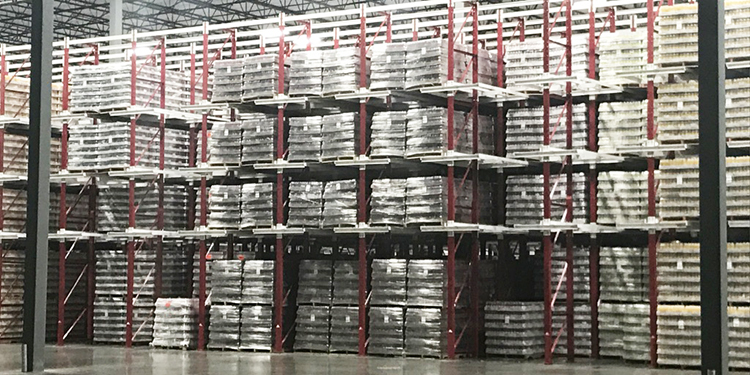
Deep-lane storage racks are high-density systems designed to store multiple pallets deep in each bay. This maximizes storage by reducing the number of aisles. These systems differ from traditional selective racks, which provide access to every pallet from an aisle but sacrifice density for accessibility.
Deep-lane systems are common where many pallets of the same SKU are stored and handled in bulk. Some deep-lane racks follow first-in/first-out (FIFO) inventory principles, while others use a last-in/first-out (LIFO) strategy.
- FIFO deep-lane systems—such as pallet flow—allow pallets to be loaded at one end and retrieved from the other. Pallet flow racks use inclined rollers or wheels, enabling pallets to naturally advance toward the picking side as operators remove earlier loads.
- LIFO deep-lane systems—such as drive-in racks and pushback racks—store pallets deep without distinct travel aisles. In LIFO configurations, the last pallet placed into the system is the first one accessible when retrieving.
Deep-lane storage racks consolidate loads into fewer aisles and extend pallet lanes deep into the rack structure. However, this higher density also affects the planning and design of flue spaces, sprinkler access, and fire protection. Deep lanes can influence the way fire sprinkler water reaches combustible pallet loads during a fire scenario.
Why Deep-Lane Storage Racks Are Under Scrutiny
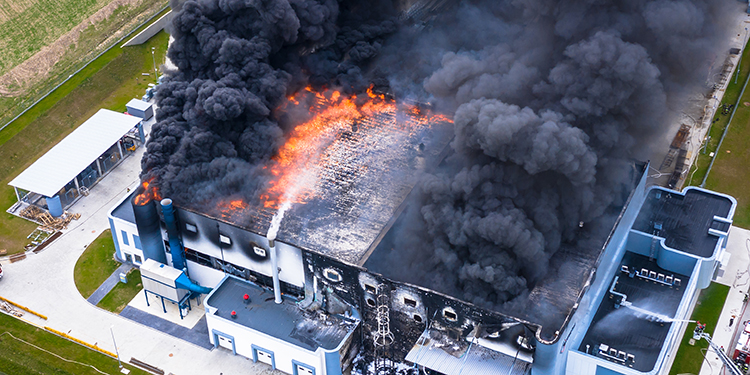
Fire sprinkler protection codes do not change casually. According to Gary Smith, PE, a Rack Manufacturers Institute (RMI) fire safety consultant and long-time participant in NFPA code development, today’s discussions around deep-lane storage resulted from large-scale warehouse fires.
“Insurance providers, particularly FM Global, play a major role in shaping fire protection requirement,” said Smith. “FM conducts its own research and full-scale fire testing at dedicated laboratories. It uses that, along with real fire loss data, to develop Property Loss Prevention Data Sheets. These data sheets often go beyond minimum code requirements and are mandatory for FM-insured facilities.”
In the case of deep-lane storage rack, concerns raised by insurers—most notably following a large loss at a consumer products storage facility—helped trigger renewed attention on how fires behave in tightly packed, multiple-row rack configurations. While much of the loss data remains confidential, insurers pushed for stricter limits based on historical testing and fire behavior observations.
What Changed in NFPA 13
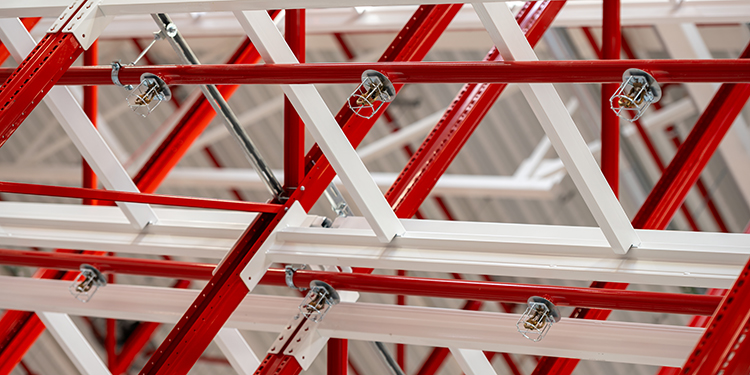
Prior to the 2022 edition of NFPA 13, pallet flow and other deep storage racks could extend to virtually any depth, provided six-inch transverse flue spaces were maintained on each side. This allowed overhead sprinklers to activate and water to penetrate the rack structure.
That changed with the introduction of new limits on multiple-row racks:
- Storage depths of 20 feet or less may be permitted without longitudinal (down-aisle) flue spaces, allowing ceiling-only sprinkler protection in many cases.
- Storage depths greater than 20 feet now require either 6-inch flue spaces on all four sides of every pallet load (both transverse and longitudinal), or the addition of in-rack sprinklers.
These requirements apply to rack types such as pallet flow, pushback, and drive-in systems, depending on configuration.
“The goal isn’t to punish users of deep storage,” Smith explained. “It’s to ensure that heat can rise quickly enough to activate sprinklers and that water can actually reach the fire once they do.”
Why Flue Spaces Matter More Than Ever
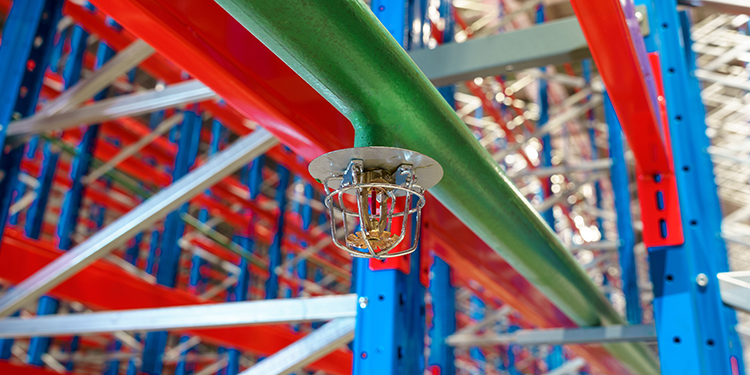
Flue spaces are not arbitrary gaps. These engineered pathways allow heat and water to move vertically through a rack system. In deep-lane storage, however, pallets are tightly packed front to back. That close proximity can obstruct flue spaces and delay sprinkler activation or prevent water from reaching the seat of the fire.
When pallet overhang, load shift, or system design result in blocked flue spaces, fires can grow unchecked inside the rack structure. That risk increases as storage heights climb and commodities become more combustible.
The Impact on Rack Design and Costs
From a practical standpoint, the updated requirements have real consequences:
- Reduced storage density in order to maintain flue spaces between pallet loads.
- Higher project costs when in-rack sprinklers are required.
- Water supply limitations, particularly in older buildings not designed for increased sprinkler demand.
- Design tradeoffs, with some operators opting to revert to shallower, less dense rack systems to avoid sprinkler upgrades.
Smith noted that in some cases, rack owners have abandoned deep-lane designs altogether after evaluating the cost and complexity of compliance.
What’s Next: The 2028 NFPA 13 Edition
The story is not finished. NFPA is actively reviewing new fire test data related to deep-lane storage racks and automated storage and retrieval systems (AS/RS). The NFPA Research Foundation is also currently conducting full-scale fire tests FM laboratories. Smith expects the results to inform proposed code language.
What is known so far:
- Unlimited depth deep-lane storage is unlikely to return.
- New requirements are likely to be more prescriptive, particularly around sprinkler placement and rack configuration.
- Draft language will be available for public comment before final adoption.
“These changes are still in motion,” Smith said. “RMI will have the opportunity to review them, comment on them, and hopefully arrive at solutions that balance safety with operational realities.”
AS/RS Adds Another Layer of Complexity
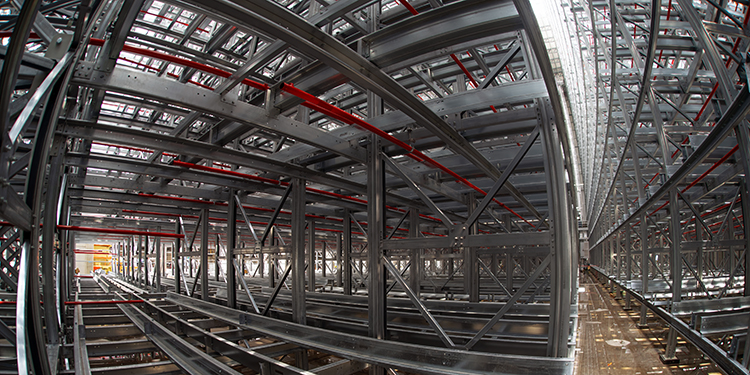
Unlike traditional static racks, AS/RS introduce motors, controls, batteries, and automated movement inside the rack structure. NFPA 13 currently offers limited guidance for these systems. That leaves designers to rely heavily on insurer standards such as FM Global data sheets.
Recent high-profile AS/RS fires—including one that forced evacuation of an entire town in the UK—have accelerated efforts to formalize protection requirements. Expect future code editions to address AS/RS more directly.
A Clear Takeaway for Rack Projects
Fire codes are evolving in response to real fire behavior, not theoretical risk. For rack manufacturers, suppliers, and rack owners, the most important takeaway is not to memorize code tables—but to recognize when early coordination is essential.
“Don’t try to make sprinkler decisions on your own,” Smith emphasized. “Changes to rack depth, beam elevations, or stored commodities can all affect fire protection performance. Those decisions need to go back to the original fire protection professional.”
Deep-lane storage racks remain viable solutions—but only when fire protection is considered from the start. As codes continue to evolve, early planning, realistic expectations, and qualified guidance will be the key to safe and successful installations.
Learn More About Rack Fire Suppression
Looking for more details about integrating fire suppression systems and storage rack? Find additional details in the “Building Departments and Fire Codes” section of RMI’s frequently asked questions (FAQs) page.