As warehouses take on greater inventory variety, higher throughput expectations, and more mixed-case storage strategies, rack decking has become a critical component of safe and efficient industrial storage systems. Many operators still assume pallet rack beams alone provide enough support. In reality, decking expands both safety and functionality in ways beams cannot.
Facilities can choose from several common options, including wire mesh, bar grating, solid steel, and engineered wood decking. Each offers distinct performance characteristics.
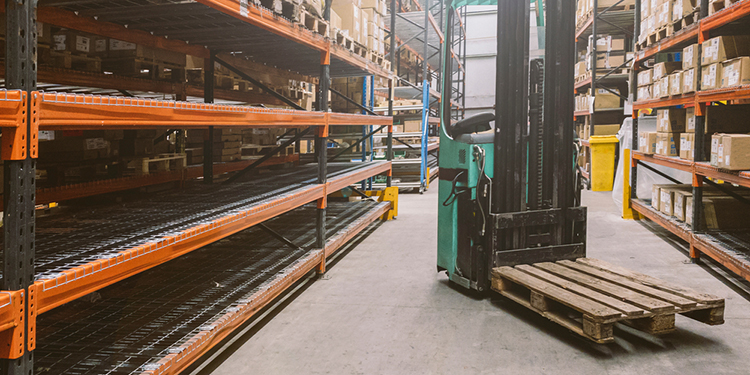
- Wire mesh supports airflow and sprinkler performance.
- Bar grating handles heavy-duty, high-load environments.
- Solid steel offers full surface coverage.
- Engineered wood provides a smooth, economical surface in suitable applications.
Because each decking type differs in strength, open area, and load behavior, they help facilities solve challenges that beams alone cannot, explained Tony Sineni, Director of Sales at Rack Builders Inc. The company is a member of the Rack Manufacturers Institute (RMI).
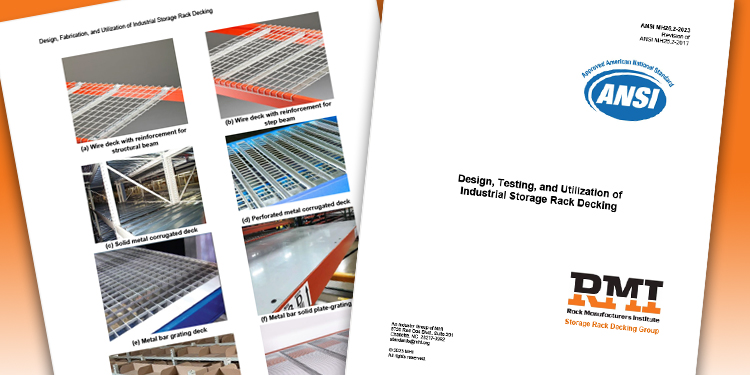
“Rack decking prevents product fall-through, distributes uneven loads, and supports non-palletized goods,” he said. “Additionally, RMI publishes ANSI MH26.2, the industry standard that governs the design, testing, and utilization of industrial storage rack decking. Understanding what decking offers—and where each material excels—sets the stage for safer, more reliable, and more versatile storage decisions.”
Rack Decking Provides Advantages Beyond Beam-Only Storage
Many facility operators overlook decking because their pallet loads appear stable on beams. However, decking delivers safety and operational benefits that beams alone cannot, Sineni noted.
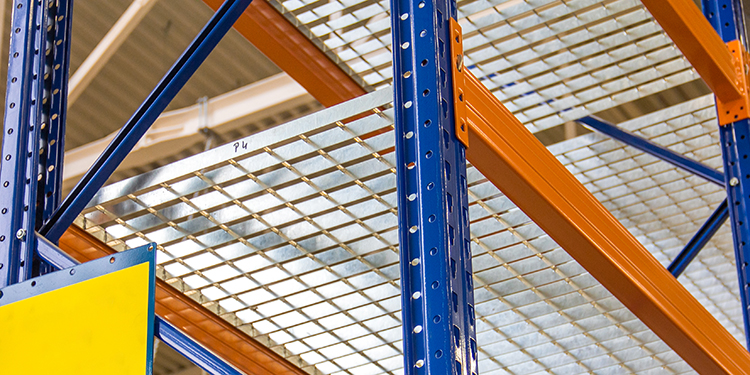
“Wire deck can prevent loose items, small products, cartons, or compromised pallets from falling between the beams,” he said. “That protects both people and product below. In busy environments where cartons shift, pallet conditions vary, or workers pick from multiple levels, that protection becomes critical.”
Decking also improves load distribution across the beam level. “Decking helps distribute the load evenly across the beam,” continued Sineni. “That minimizes point loading and reduces beam deflection.”
This even distribution supports long-term rack performance and lowers the risk of structural deformation over time. At the same time, decking increases the versatility of the storage system by accommodating cartons, irregular goods, or non-palletized items that beams alone cannot safely support. That’s because rack decking creates a larger and more forgiving placement surface.
“Decking provides operators with a much larger target for product placement,” he added. “This improves accuracy and reduces handling time. It also supports facilities with high turnover, seasonal labor, or narrow-aisle equipment that requires precise positioning.”
How Load Patterns Influence Rack Decking Selection and Performance
Different pallet load patterns impose different stresses on decking, making correct deck selection essential. Sineni emphasized the importance of involving a professional engineer and the decking manufacturer early in the process.
“Consulting with a rack engineer and the decking manufacturer is very important,” he said. “You need to understand how different loads react to the design of the decking and the rack system.”
Uniformly distributed loads represent the most common design case. A typical example is a standard 48 x 40-inch Grocery Manufacturers Association (GMA) pallet where the load spreads across the entire deck.
Other applications involve concentrated pressure. “Point loads are concentrated static loads applied over a small area,” Sineni explained. “Items such as heavy equipment, metal bins, or pallets with small runners can create these pressure points. Most standard decking is rated for uniformly distributed loads and may not be adequate for a point load.”
To help with decking selection, Sineni advised buyers to seek out decking manufacturers whose products are tested and rated for performance under uniform and point loads in accordance with ANSI MH26.2.
“Facilities that store irregular or high-density items need to verify the exact footprint of the load and confirm that the deck design matches the loading condition. This is something the ANSI standard helps clarify,” he said.
How ANSI MH26.2 Supports Buying Decisions
Rack decking buyers often misunderstand what capacity ratings actually represent. Many assume a single load number applies universally, cautioned Sineni.
“However, that rating typically applies only under a specific test condition. Usually, that’s a uniformly distributed load, unless otherwise stated,” he said.
To help buyers evaluate potential decking options, ANSI MH26.2 establishes both test methods and the criteria that manufacturers use to determine capacities. These include deflection limits, ultimate strength, and multiple alternate loading patterns, such as point loads and linear loads.
The standard itself gives end users the framework they need to compare products accurately. “By referencing ANSI MH26.2 when discussing deck performance with manufacturers, buyers ensure they evaluate decking based on consistent and verified criteria,” Sineni added.
How Decking Supports Operational and Safety Goals
In addition to supporting pallet loads, decking can influence several other operational considerations. Decking type and open area can affect sprinkler performance, airflow, light penetration, and the ability to identify products from ground level. Using the correct decking material ensures that both operational and safety systems—such as fire suppression—function as intended.
Facilities also rely on decking to reduce product damage. A compromised pallet or a carton with a soft bottom may sag or deform over time. Rack decking minimizes that risk by providing a stable support surface. In high-volume picking or case-picking environments, decking improves access and reduces the likelihood of product loss during handling.
Choosing the Right Decking Material for the Application
When evaluating wire mesh, bar grating, solid steel, engineered wood, or other decking types, buyers should prioritize application-specific needs rather than price. Sineni stressed that operators first consider the load itself.
“Knowing what the product is, what pallet or container it uses, and the size and weight of that load is critical,” he said. Choosing a deck without understanding load geometry can lead to overstressing, poor performance, or unnecessary wear, he cautioned.
Local code requirements also shape material selection.
“Always check the local code for the type of decking that can be used—and what cannot be used,” advised Sineni. “Some jurisdictions restrict solid decking because it may block sprinkler discharge patterns.”
Environmental conditions further influence the choice. Facilities that operate in humid, corrosive, or temperature-variable environments may require galvanized or other protected decking materials to maintain long-term structural integrity.
The type of product stored also guides decking selection, he added. “For smaller or loose items, a finer mesh or solid surface might be needed to prevent product from falling through,” Sineni said. “Conversely, items that require ventilation or moisture dissipation often perform best on open mesh designs.”
Discover More Rack Design Best Practices
Looking for more insights into rack decking? RMI offers several resources and publications, including the recently updated “Considerations for the Planning and Use of Industrial Steel Storage Racks.” Additionally, the members of RMI are available to provide guidance, suggestions, and recommendations. For more information, visit mhi.org/rmi.