As labor shortages, stock keeping unit (SKU) growth, and customer expectations continue to accelerate, warehouse automation is no longer just a competitive advantage. It’s becoming essential infrastructure. Yet many companies still approach automation through a single lens: How fast will it pay for itself?
That narrow focus can lead to costly oversights, said Ryan Wachsmuth, SE Regional Sales Manager at Steel King Industries. The company is a member of the Rack Manufacturers Institute (RMI). Wachsmuth has years of experience helping facilities deploy automation and optimize pallet rack storage systems.
“With automation, you’ve got to consider the whole scope of your operation. Don’t just focus on a single area or process,” he advised. “Instead, think about how the automation is going to help other departments—or hinder them?”
Automation can absolutely deliver strong financial returns, emphasized Wachsmuth. However, he added, its true value comes from maximizing its enterprise-wide impact.
“That includes identifying how the automation will interact with pallet racking, storage density, and material flow,” he said. “You’ve got to get the whole scope. It’s not just the ROI of the automation. It’s important to look at the hidden costs and savings opportunities too.”
In other words, while return on investment (ROI) matters, long-term operational impact matters more. Before investing, companies should evaluate how an automated system will affect people, layout, infrastructure, costs, and future scalability. That includes considering how well automation integrates with existing or future pallet racking systems.
“Companies that take a holistic view are not just buying robots or software,” added Wachsmuth. “They’re building a smarter, safer, more resilient operation where all of their assets—including automated systems, storage rack, handling equipment, and personnel—work together as part of a unified design.”
The following are several key considerations to help organizations determine the benefits of an automation investment, beyond ROI.
Factor #1: Cross-Department Impact and Long-Term Scalability
Many automation projects focus on a single process, such as pallet movement, picking, or replenishment. However, Wachsmuth advised buyers to also assess how the implementation will affect upstream and downstream operations. These include receiving, putaway, replenishment, and packing.
“Determine how the automation will impact other departments,” he said. “For example, if you’re currently moving a certain number of pallets through your facility in a day, how many more can you move with the automation? If it’s 50% more, how will that increase in volume affect other areas?”
Wachsmuth advised starting with an evaluation of current inventory flow, considering:
- Will automation solve a bottleneck or simply move it elsewhere in the process?
- Will adjacent pallet rack areas need layout or labor changes to maintain performance?
- Will the automation still serve the operation if order profiles, SKU velocity, or storage density requirements shift?
“Ultimately, automation shouldn’t solve today’s constraints only to create tomorrow’s congestion or workflow problems,” Wachsmuth added.
Factor #2: Workforce Planning and Job Reallocation
One of the biggest misconceptions is that automation replaces jobs. In reality, it often reallocates them. Therefore, companies must plan accordingly.
“Nobody wants to lose a job. Consider where you might move these people within your operation. Or, what training and advancement doors does the automation open for your team?” Wachsmuth noted.
Key questions include:
- Which roles will automation eliminate, change, or create?
- Do existing workers have the aptitude to become operators or maintenance technicians?
- Can displaced labor address bottlenecks elsewhere, such as replenishing pallet racks or performing value-added services?
Companies that fail to plan for workforce transitions often face employee resistance, Wachsmuth noted. “This can lead to low adoption rates and a longer ROI timeframe, as the maximum benefits of the system take longer to attain,” he said.
Factor #3: Maintenance Strategy and Service Cost
Automation manufacturers offer service agreements similar to forklift maintenance contracts. While these contracts make service predictable, they can become increasingly expensive over time.
“There’s always money going out the door, whether you’re fully using the service or not,” Wachsmuth said. “You might be better off training someone internal to support the system.”
Companies must evaluate:
- Will you outsource all maintenance or upskill internal staff?
- Does the vendor require a service contract for warranty?
- Are replacement parts proprietary? Do they require stocking on-site?
- How long is expected downtime if something breaks?
Choosing the right maintenance strategy can add—or remove—hundreds of thousands of dollars from the long-term automation cost model.
Factor #4: Facility Infrastructure and Layout Readiness
Automation does not drop into an existing building without consequences. Power, fire protection, traffic flow, and space requirements can all require upgrades.
“Will the automated system need more electricity or a specific charging infrastructure? If construction or structural installations are necessary, are you following code? Do you have the available floor space for the automation to navigate safely?” Wachsmuth asked.
Critical infrastructure considerations include:
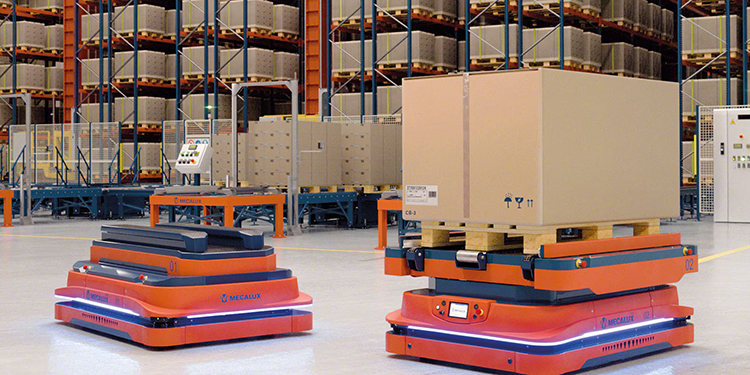
- Charging stations for automatic guided vehicles (AGVs) or autonomous mobile robots (AMRs).
- Power draw and circuit capacity.
- Sprinkler coverage under FM Global or other rack-related fire codes.
- Clearances and flue spaces between automation equipment and pallet racks.
- Safe pedestrian paths and designated equipment traffic lanes.
Wachsmuth stressed the importance of safeguarding personnel when implementing automation.
“This is especially true for personnel working within or around pallet rack storage systems,” he said. “Many automated systems include safeguards and sensors that help protect employees from unsafe interactions. However, depending on the type of automation, personnel and traffic areas may need segregated zones for safety. Even simple additions like rack guardrails or wire partitions can pay for themselves if they prevent a single incident.”

Factor #5: Reducing Hidden Operational Costs
Too often, ROI calculations look only at labor savings and throughput gains. There are often operational costs that automation can help reduce.
“For example, automated transportation systems like AMRs and AGVs can reduce the number of forklifts in an operation,” said Wachsmuth. “Forklift impacts damage pallet racks; eliminating them eliminates that damage. The costs and downtime associated with replacing damaged rack uprights and beams likewise go away. So does the risk of a rack collapse.”
Other frequently overlooked cost trade-offs include equipment maintenance and protection, fuel and energy consumption, downtime, and floorspace availability.
“Adding automation nearly always requires more electricity in the building. Automated vehicles need charging stations, for instance,” he added. “They also need dedicated floorspace for those charging stations. Companies need to consider those trade-offs when looking at the total cost of an automation investment.”
Learn More About Pallet Rack and Automation
RMI recommends that facility owners, engineers, and integrators work with qualified manufacturers who understand the complexities of integrating pallet rack and automation. All designs should follow ANSI MH16.1 and other RMI standards to ensure compliance with structural and operational requirements. For more information, consult “Considerations for the Planning and Use of Industrial Steel Storage Racks.” Additionally, RMI members are available for guidance, insights, and recommendations. For more information, visit mhi.org/rmi.