Cold storage environments demand more from racking systems than any other warehouse application. These facilities may operate at sub-zero temperatures, often include high-throughput automation, and require compliance with strict hygiene and safety standards. To ensure performance and protect workers, every system must be engineered with precision and purpose.
Cold storage facilities demand high-performing racking systems that go beyond basic structural strength. They must be corrosion-resistant, thermally stable, automation-ready, and hygienically compliant, explained Sebastian Marshall, U.S. Product Manager at AR Racking. The company is a member of the Rack Manufacturers Institute (RMI).
“Mistakes in design or material selection can lead to system failure, product loss, or safety risks,” he said.
Not All Cold Storage Is the Same
Cold chain environments include refrigerated, frozen, and ultra-low-temperature zones. Each presents different design challenges, Marshall noted.
“For example, cold storage racks used in refrigerated spaces holding fresh food and pharmaceuticals require protection against condensation and humidity,” he said.
Freezer warehouses, which can reach -22°F, introduce issues like thermal contraction and material brittleness. Ultra-low storage used in biotech can drop to -40°F, demanding specialized materials and finishes that retain mechanical integrity in extreme cold.
“Rack systems must be tailored to these conditions from the start,” continued Marshall. “Standard rack designed for ambient environments cannot withstand the physical and thermal stresses of cold chain operations.”
Materials That Perform in Sub-Zero Temperatures
Material selection is critical when designing and engineering cold storage racking. Moisture and freezing conditions accelerate corrosion. Traditional finishes may crack or peel. Hot-dip galvanized steel offers excellent resistance to both corrosion and freeze-thaw cycles.
“Cold-rated epoxy-polyester powder coatings retain their flexibility and impact resistance, even in deep freeze environments,” noted Marshall. “Meanwhile, food-grade finishes are essential for operations governed by Food and Drug Administration (FDA), United States Department of Agriculture (USDA), or NSF/ANSI standards.”
To support hygiene and minimize frost buildup, cold storage racks often incorporate open profiles. These allow air circulation and facilitate cleaning and drainage.
Automation Systems Require Structural Precision
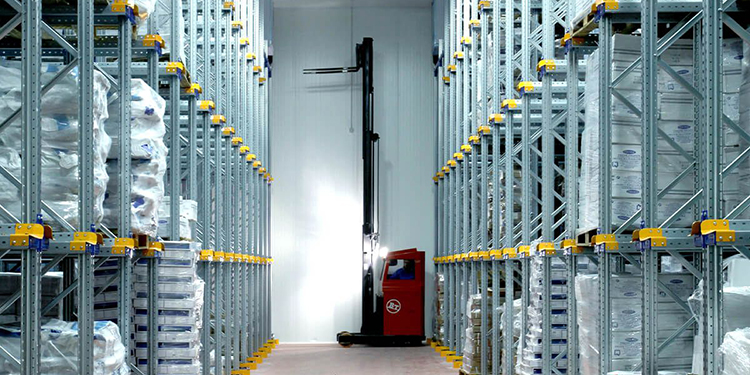
Automation technologies such as pallet shuttles, mobile racking, and high-bay automated storage and retrieval systems (AS/RS) are common in cold storage applications. These automated handling solutions reduce energy use and increase throughput. However, they also place unique demands on racking.
“For example, pallet shuttle systems need extremely straight and stable guide rails,” Marshall explained. “Mobile racking must be engineered with reinforced bases to handle movement and cold-induced stress.”
Additionally, AS/RS cranes operating at heights over 100 feet require rack structures with reinforced bracing. This ensures the rack maintains the tight tolerances required by automation while withstanding temperature-induced contraction.
“In all cases, specialized anchoring may be needed to interface with vapor barriers, heated subfloors, or cold slabs,” he added.

AGVs and AMRs in Cold Storage: A New Set of Challenges
Automated guided vehicles (AGVs) and autonomous mobile robots (AMRs) bring efficiency to frozen facilities. However, they also introduce technical complications, noted Marshall.
“Cold temperatures reduce battery performance and limit run time. It can also sharply reduce charging efficiency,” he continued. “Condensation or frost on sensors can interfere with navigation. Slippery floors increase the risk of navigation errors that can lead to rack collisions.”
To mitigate these issues and improve both reliability and safety, racking systems can include:
- Protective guards at robot height.
- Structural geometry optimized for sensor fields.
- Mounting points for thermal-resistant navigation aids like beacons or reflectors.
Cleanliness and Compliance Can’t Be Afterthoughts
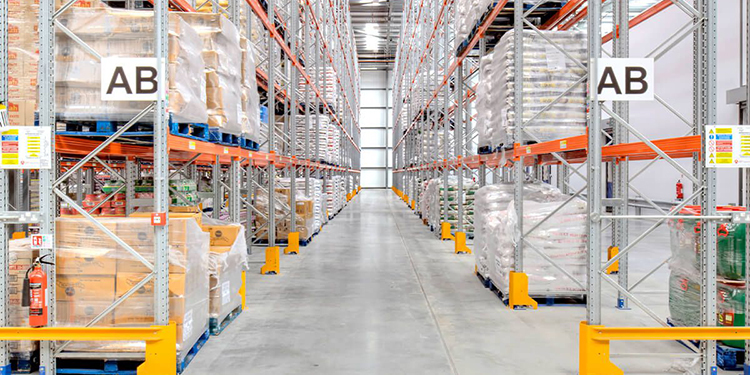
Food and pharmaceutical cold storage must meet high hygiene standards. Racking systems must be easy to clean, resistant to harsh disinfectants, and free of surfaces that could harbor bacteria.
“That means sealed finishes and smooth profiles are essential,” explained Marshall. “Modular racking components allow disassembly for deep cleaning.”
He also advised using integrated labeling systems. “These support traceability in regulated environments,” he said.
All systems should be designed to comply with relevant guidelines. These include recommendations from the FDA, USDA, and the Global Food Safety Initiative (GFSI).
Racking That Supports Energy Efficiency
Energy efficiency is a critical factor in cold storage operations. Well-designed racking helps conserve energy in several ways.
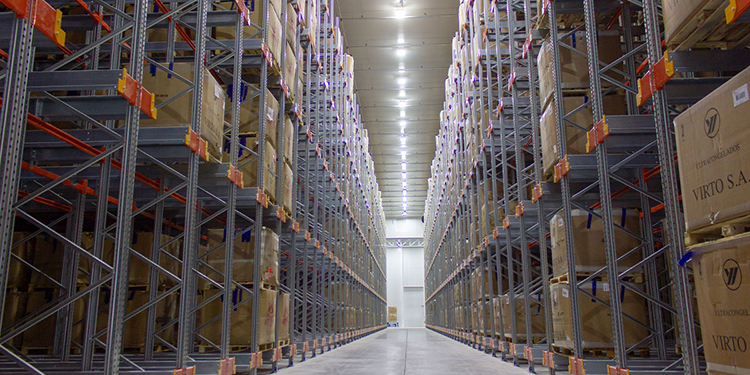
“Taller rack systems allow more pallets to be stored in less cooled air volume,” Marshall said. “Further, tighter aisle spacing reduces air exchange and temperature fluctuation.”
Additionally, strategic design of rack openings supports airflow. That can help a facility maintain consistent temperatures throughout the space, he noted. “These efficiencies not only reduce operating costs but also enhance the performance of automated systems.”
Learn More About Pallet Rack for Automated Cold Storage
RMI urges facility owners, engineers, and integrators to work with qualified manufacturers who understand the complexities of cold environments. All designs should follow ANSI MH16.1 and other RMI standards to ensure compliance with structural and operational requirements. For more information, consult “Considerations for the Planning and Use of Industrial Steel Storage Racks.” Additionally, RMI members are available for guidance, insights, and recommendations. For more information, visit mhi.org/rmi.